The best energy-efficient window fans can improve comfort and ventilation without the power demands of a portable air conditioner. The right model can draw in cooler outdoor air, exhaust hot room air, or do both at once.
We compared these 10 options by airflow control, noise, thermostat features, window fit, cleaning access, and everyday convenience so you can choose a fan that matches your room and climate.
Best 10 Energy Efficient Window Fans Picks for 2026
Smart Temperature Control
Bionaire Reversible Window Fan

- Programmable thermostat with LED display
- Three airflow modes and remote control
- Fits 24–36-inch windows
Best For: Automatic cooling control in bedrooms and living spaces
Flexible Low-Wattage Airflow

- 45.9-watt listed power draw
- Fits 22¼–33-inch windows
- Includes bug screen and tabletop feet
Best For: Versatile intake, exhaust, and freestanding use
Simple Mechanical Efficiency
BLACK+DECKER 9-Inch Dual Window Fan

- 56-watt listed power draw
- Two mechanical speed settings
- Fits 22.5–33-inch windows
Best For: Straightforward manual cooling and ventilation
High-Output Thermostatic Cooling
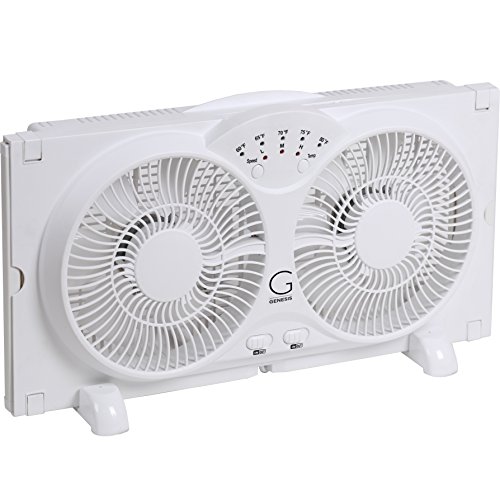
- 30-watt listed power draw
- 60–80-degree adjustable thermostat
- Listed airflow capacity of 706.21 CFM
Best For: Strong, thermostat-assisted bedroom ventilation
Thermostat Pick
Holmes Dual Blade Digital Window Fan
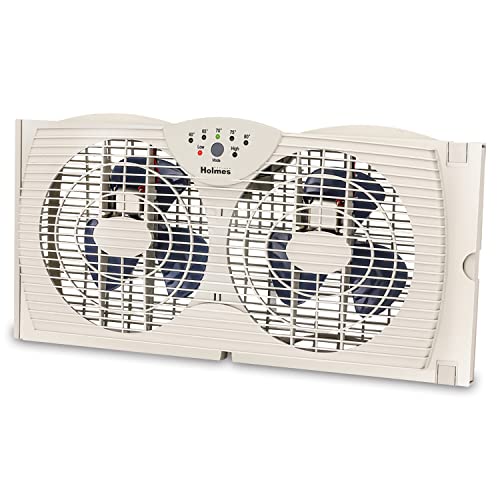
- Programmable thermostat for automatic temperature control
- Expandable fit for double-hung and slider windows
- Water-resistant motors and 3-year limited warranty
Best For: Temperature-based airflow control and larger window openings
Low-Wattage Value
Shinic 9-Inch Reversible Window Fan

- 70-watt operation with three speeds
- Intake, exhaust, and circulation modes
- Remote, expandable panel, and foam sealing strip included
Best For: Low-power reversible airflow with flexible window placement
Smart Energy Choice
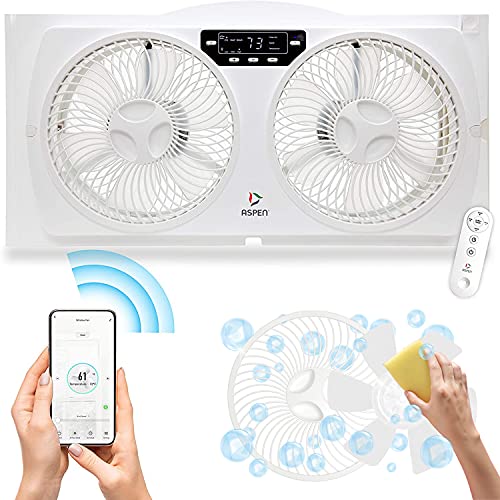
- App, Alexa, and Google Assistant control
- 60–80°F programmable thermostat
- Detachable washable blades and reversible airflow
Best For: Connected homes seeking automated temperature and fan control
Best Overall
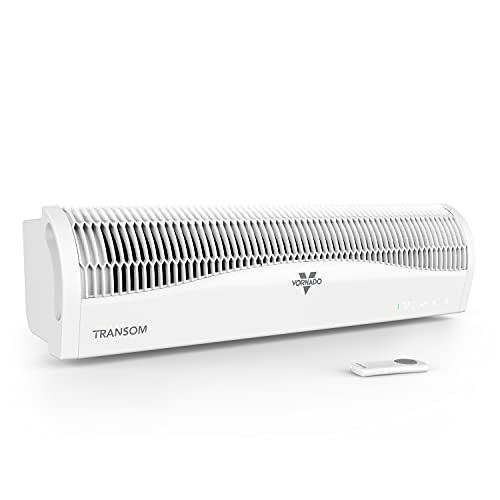
- 25-watt operation with four speeds and 185 CFM airflow
- Electronic intake and exhaust switching
- Quiet, low-profile design with remote control
Best For: Whole-room ventilation and customizable comfort
Best for Adjustable Airflow

- Three directional airflow settings with automatic oscillation
- Four speeds, timer, remote, and electronic exhaust mode
- Fits windows up to 40 inches wide
Best For: Flexible circulation and even room cooling
Best for Thermostat Control

- Thermostat cycles the fan between 60°F and 85°F
- Three modes: intake, exhaust, and air exchange
- Expandable 23.5–37-inch fit with included foam seal
Best For: Automatic temperature management and versatile ventilation
Smart Temperature Control – Bionaire Reversible Window Fan
For shoppers comparing energy efficient window fans, the Bionaire stands out for its programmable thermostat, three speed settings, and flexible reversible airflow. It can draw in fresh air, exhaust warm air, or exchange airflow while using a standard 120V outlet.
Best For: Bedrooms, home offices, and living spaces where automatic temperature-based operation and remote control are useful.
Pros:
- Programmable thermostat can turn the fan on and off based on the selected temperature.
- Reversible airflow supports intake, exhaust, or simultaneous air exchange.
- Fits 24–36-inch windows with built-in and additional extender panels.
- Includes a remote, LED display with dimmer, and three-year limited warranty.
Cons:
- At 120 watts, its listed wattage is higher than several alternatives in this roundup.
- The 47 dB noise rating may matter to especially noise-sensitive sleepers.
This is a feature-rich choice for buyers who want more than manual fan control. Its thermostat and remote add convenience, while the broad window-fit range improves installation flexibility.
Flexible Low-Wattage Airflow – Comfort Zone Twin Window Fan
The Comfort Zone is a practical option among energy efficient window fans, with a listed 45.9-watt draw, three manual speeds, and reversible airflow. Its expanders, removable bug screen, and tabletop feet make it adaptable for window or freestanding use.
Best For: Buyers who want an affordable, versatile fan for intake, exhaust, ventilation, or portable room circulation.
Pros:
- Three speed settings provide simple manual airflow control.
- Auto-locking expanders fit windows from 22¼ to 33 inches wide.
- Removable bug screen and fabric cover help limit bugs, dust, and debris.
- Removable feet allow tabletop or floor placement when it is not window-mounted.
Cons:
- Airflow reversal requires manually turning the unit around.
- Its listed 53.3 dB noise level is higher than the Bionaire’s listed rating.
- It has a one-year manufacturer-defect warranty.
Choose this model if flexibility matters more than electronic controls. Its low listed wattage and multiple installation options make it a useful everyday ventilation fan.
Simple Mechanical Efficiency – BLACK+DECKER 9-Inch Dual Window Fan
The BLACK+DECKER 9-inch dual fan keeps the controls simple with two mechanical speed settings and a 56-watt listed power draw. It reverses airflow by flipping the unit and includes expanders and removable legs for a flexible fit.
Best For: Shoppers seeking straightforward, manually controlled cooling and ventilation for standard-size windows.
Pros:
- Two speed settings offer uncomplicated low or high operation.
- Dual fan heads circulate air across bedrooms, kitchens, bathrooms, and living areas.
- Accordion expanders fit windows from 22.5 to 33 inches.
- Removable legs support alternative placement, and rust-resistant construction is designed for durability.
Cons:
- Airflow direction changes by turning the whole fan around rather than using a reversing control.
- Only two speed settings are provided.
- It does not list a programmable thermostat or remote control.
This model suits buyers who prefer fewer controls and a familiar mechanical dial. It offers useful window-size flexibility and dual airflow without adding electronic features.
High-Output Thermostatic Cooling – Genesis Twin Window Fan
The Genesis A1WINDOWFAN combines three speeds with a built-in 60–80-degree thermostat and reversible airflow. With a listed 30-watt power draw and claimed 706.21 CFM airflow capacity, it is a strong candidate for shoppers comparing energy efficient window fans with higher-output ventilation.
Best For: Bedrooms and rooms that need strong intake or exhaust airflow with thermostat-based control.
Pros:
- Three speed settings support adjustable cooling.
- Built-in thermostat and LED indicators help track the temperature setting.
- Reversible blades can operate for intake or exhaust purposes.
- Expandable side panels add 6.5 inches on either side for window fitting.
Cons:
- Airflow and thermostat controls are button-based rather than remote-controlled.
- The unit weighs 8.4 pounds, making it heavier than the other listed models.
- The supplied notes do not specify a warranty period.
The Genesis is compelling when airflow capacity and low listed wattage are priorities. Its thermostat adds convenience, while the expandable panels and reversible operation support practical window ventilation.
Thermostat Pick – Holmes Dual Blade Digital Window Fan
The Holmes Dual Blade Digital Window Fan is a practical choice for shoppers comparing energy efficient window fans with automatic temperature control. Its programmable thermostat, two speeds, and expandable fit help regulate airflow in many double-hung or slider windows.
Best For: Rooms where automatic temperature-based airflow and broad window compatibility matter.
Pros:
- Programmable thermostat helps maintain a selected temperature.
- Expandable side panels and an adjustable extender accommodate larger windows.
- Water-resistant motors support use in rainy conditions, and the fan includes a 3-year limited warranty.
Cons:
- Only two speed settings are available.
- The listed wattage is 240 watts, which may be higher than some lower-power alternatives.
- Control is through push buttons rather than an app or remote.
Choose this model if thermostat automation and a secure, adjustable window fit are more important than having multiple speeds or smart controls.
Low-Wattage Value – Shinic 9-Inch Reversible Window Fan
The Shinic 9-Inch Window Fan suits shoppers seeking energy efficient window fans with flexible airflow at a relatively low 70-watt rating. It can draw in cool air, exhaust hot air, or circulate fresh air, while three speeds and a remote add everyday convenience.
Best For: Bedrooms, living areas, or other rooms needing reversible airflow and low-power operation.
Pros:
- Uses 70 watts and offers three airflow modes plus three speeds.
- Remote control allows operation from a distance.
- Expandable panel fits windows from 23.5 to 37 inches and includes foam sealing tape to reduce air leaks.
- Can be used in a window or as a free-standing fan.
Cons:
- The remote requires two AAA batteries, which are not included.
- Its listed noise level is 49 dB.
- The unit has fewer automation features than a thermostat- or app-controlled model.
This is a strong practical option when low stated power consumption, reversible operation, and flexible placement outweigh the need for smart scheduling.
Smart Energy Choice – Aspen Smart Window Dual Fan
The Aspen Smart Window Dual Fan stands out among energy efficient window fans for its app and voice controls, programmable thermostat, and claimed energy savings of up to 60% compared with other fans. It also provides reversible airflow and washable blades for convenient long-term maintenance.
Best For: Smart-home users who want remote temperature management and automated fan operation.
Pros:
- Works with the AspenHome app, Alexa, and Google Assistant over 2.4GHz Wi-Fi.
- Programmable 60–80°F thermostat can automatically turn the fan on or off.
- Supports three speeds and remote control of airflow direction and function.
- Detachable, washable blades and grilles simplify cleaning.
Cons:
- Its listed noise level is 60 dB.
- Smart features require compatible connectivity and setup.
- The product has a 1-year warranty.
Consider the Aspen when automation and connected-home control are priorities; its thermostat and claimed energy reduction make it especially appealing for users who want to manage runtime more precisely.
Best Overall – Vornado TRANSOM Window Fan
For shoppers comparing energy efficient window fans, the Vornado TRANSOM offers adjustable airflow, electronic intake/exhaust switching, and a low-profile fit for many single- and double-hung windows. Its 25-watt rating, four speeds, and automatic temperature control provide flexible everyday ventilation.
Best For: Whole-room circulation, quiet operation, and convenient remote-controlled intake or exhaust.
Pros:
- Electronic reversible mode switches between fresh-air intake and stale-air exhaust.
- Four speeds, remote control, and automatic temperature control support customized comfort.
- Weather-resistant case and Soft-fit foam blocks help create a secure, low-profile installation.
- Quiet operation is rated at 45 dB, with a 25-watt motor and 185 CFM airflow capacity.
Cons:
- Fits only windows 26–40 inches wide and openings at least 8 inches tall.
- Horizontal installation is required, and removing the window screen may be necessary.
- Designed for use with U.S. voltage requirements.
The TRANSOM is a strong all-around choice when efficient power use, flexible airflow direction, and low-noise operation matter. Confirm your window dimensions and installation depth before buying.
Best for Adjustable Airflow – EVO Window Fan Air Circulator
The EVO Window Fan Air Circulator is a practical option among energy efficient window fans for shoppers who want directional control without fully blocking the view. It combines four speeds, three directional airflow settings, electronic exhaust, and a timer in a low-profile window-mounted design.
Best For: Customizable circulation, even room cooling, and windows up to 40 inches wide.
Pros:
- Three directional airflow settings help tailor cooling and ventilation.
- Four speed levels, remote control, timer, and touchpad controls add convenience.
- Automatic internal oscillation helps distribute airflow and reduce hot spots.
- Weather-resistant case, bug screen, washable pre-filter, and adjustable side panels support everyday use.
Cons:
- The listed dimensions are 26.8 inches wide by 9.1 inches high and 9.05 inches deep, so depth should be checked carefully.
- The supplied notes do not specify wattage, airflow capacity, or noise level.
- It is intended for indoor use despite its weather-resistant case.
Choose the EVO when directional airflow and maintenance features are more important than published energy-use specifications. Its adjustable panels and controls make it versatile, but measure the window opening before installation.
Best for Thermostat Control – SHINIC Twin Window Fan
The SHINIC Twin Window Fan suits shoppers seeking energy efficient window fans with automatic temperature management. Its programmable thermostat can turn the fan on or off between 60°F and 85°F, while three airflow modes support intake, exhaust, or air exchange.
Best For: Budget-conscious temperature control in bedrooms, living spaces, and other compatible windows.
Pros:
- Three functions provide cooling intake, hot-air exhaust, or outside air exchange.
- Programmable thermostat automatically cycles the fan to maintain a selected temperature.
- Remote control adjusts speed, airflow direction, and temperature from across the room.
- Expandable side panels fit windows from 23.5 to 37 inches, and included foam tape helps minimize air leaks.
Cons:
- Its 80-watt rating is higher than the Vornado model in this roundup.
- Only three speed settings are available.
- The 23.5-inch-wide body and 11.8-inch height may require more window clearance than low-profile alternatives.
The SHINIC stands out for thermostat-based operation and a complete installation package, including foam sealing tape. It is worth considering for rooms where automatic cycling is more useful than the lowest listed wattage.
How We Picked the Best Energy Efficient Window Fans
We focused on features that affect real-world efficiency and usability rather than relying on speed-count claims alone. The shortlist includes single and twin-fan designs, reversible airflow, programmable thermostats, remote controls, adjustable widths, and models with smart or app-based operation.
We also considered installation flexibility, ventilation performance, cleaning convenience, weather protection, and controls that help prevent unnecessary runtime. Because window dimensions and room layouts vary, no single fan is ideal for every buyer.
Quick Comparison
- Best for broad window compatibility: EVO Window Fan Air Circulator, which fits windows up to 40 inches.
- Best for smart-home control: Aspen Smart Window Dual Fan with Wi-Fi app operation.
- Best for premium weather resistance: Vornado TRANSOM Window Fan.
- Best for adjustable twin-fan ventilation: Bionaire, COMFORT ZONE, Genesis, Holmes, and shinic twin-window models.
- Best for a compact 9-inch design: BLACK+DECKER or shinic single-window fans.
Key Buying Factors for Energy-Efficient Window Fans
Airflow Direction and Fan Design
Reversible airflow is valuable when you want to exhaust warm, stale air during the day and bring in cooler outdoor air later. Twin fans can often run in intake, exhaust, or mixed configurations, while single fans may provide more targeted circulation.
Power Controls and Efficiency
Look for multiple speed settings, thermostat control, timers, and automatic shutoff features. A thermostat can reduce wasted electricity by stopping the fan after the room reaches your chosen temperature. Remote or app controls also make it easier to adjust operation without leaving the room.
Fit, Sealing, and Installation
Measure the clear opening before buying, including the usable width and height. Expandable side panels help cover wider openings, but a secure fit and reasonable seal matter just as much as nominal size. Gaps can reduce cooling performance and let outdoor air, dust, or insects inside.
Noise, Cleaning, and Weather Exposure
For bedrooms and offices, prioritize low-noise operation and lower speed settings. Removable or detachable blades simplify maintenance, while a weather-resistant case is useful when the fan remains installed during changing conditions. Even energy-efficient fans perform poorly when dust buildup restricts airflow.
Who Should Buy Which Energy Efficient Window Fans?
Choose a programmable thermostat model if you want automatic temperature management or tend to forget to switch appliances off. Select a twin-fan design for stronger whole-room ventilation and flexible intake or exhaust operation. A compact 9-inch fan suits smaller windows, bedrooms, and budget-focused setups.
Choose the Aspen model if app control fits your smart-home routine, or the Vornado TRANSOM if weather resistance, quiet operation, and polished controls matter most. For unusually wide windows, the EVO model is worth considering. Before ordering, confirm the stated window range, outlet location, control method, and whether the unit can remain safely installed in your window.