Wooden foot rollers offer a simple, manual way to massage tired arches, heels, and soles without batteries, charging, or complicated settings. Their ridged rollers can provide focused pressure while you sit at a desk, relax after work, or warm up before activity.
We compared 10 popular options for roller design, portability, pressure control, construction, and everyday comfort to help you choose the right foot massager for your routine.
Best 10 Wooden Foot Rollers Picks for 2026
Best All-Around Pick
TheraFlow Dual-Zone Wooden Foot Roller

- Five rows combine ridged rollers and reflexology nubs
- Non-slip base supports stable, controlled use
- Lightweight and portable with a reflexology chart
Best For: Versatile daily foot massage and pressure-point stimulation
Best Simple Design
Bloch Dance Wooden Foot Roller

- Targets tension beneath the arches
- Portable and easy to use
- Traditional wood rolling design
Best For: Simple arch massage at home or on the go
Best for Reflexology
TheraFlow 5-Row Wooden Foot Massager

- Five rows offer varied rolling and acupressure
- Final row features 96 reflexology nubs
- Non-slip strips and chart included
Best For: Textured reflexology and targeted sole stimulation
Best Compact Roller
tuuli Natural Beech Wood Foot Roller

- Natural beech wood construction
- Grooved surface targets pressure points
- Lightweight 150 g design
Best For: Simple, portable foot relaxation and tension relief
Best Overall

- 1,000+ ridges and 48 raised nodes
- Ergonomic arch for full sole contact
- Non-slip pads and polished wood
Best For: Focused plantar-fasciitis and tension relief at home or work
Most Versatile
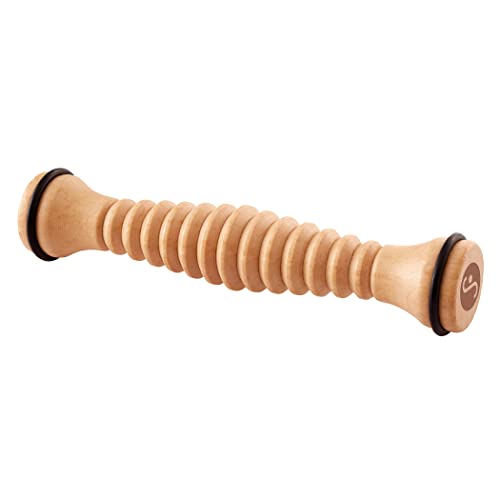
- Ridged surface targets key foot areas
- Also works on calves, thighs, and arms
- Lightweight 3.2-ounce portable design
Best For: Runners and users wanting a compact multipurpose roller
Best Dual-Foot Design
TheraFlow Small Dual Foot Massager

- Arched design supports both feet
- Non-slip strips improve stability
- Lightweight for desk or travel use
Best For: Dual-foot massage for plantar fasciitis, neuropathy, and sore arches
Natural Beechwood Pick

- Multiple rows of textured wood casters
- Broad one-foot rolling surface
- Manual, cordless beechwood design
Best For: Seated users wanting adjustable, no-power foot massage
Arch-Support Design
Cozlow Wooden Acupressure Roller

- Four ridged rows with acupressure nubs
- Arch-shaped foot-supporting design
- Lightweight and portable
Best For: Targeted pressure-point massage at home or on the go
Reflexology Feature Pick
Brookstone Dual-Function Foot Roller

- Five textured massage rows
- Dedicated reflexology nub row
- Anti-slip base and portable design
Best For: Users wanting textured rolling with reflexology-focused features
Best All-Around Pick – TheraFlow Dual-Zone Wooden Foot Roller
For shoppers comparing wooden foot rollers, this TheraFlow model stands out for its five massage rows, combining ridged acupressure rollers with a reflexology-nub row. Its non-slip base, portable design, and foot-arch shape make it practical for seated use at home or under a desk.
Best For: People seeking versatile daily foot massage with multiple textures and stable, portable construction.
Pros:
- Five rows provide two distinct massage zones for heel-to-toe coverage.
- Non-slip base supports controlled use on different surfaces.
- Lightweight Schima Superba wood construction is portable.
- Includes a reflexology chart for guided use.
Cons:
- Manual rolling requires the user to control pressure.
- It is not water resistant.
Choose this model if you want one of the more feature-rich wooden foot rollers for routine relaxation, arch care, and targeted pressure-point massage.
Best Simple Design – Bloch Dance Wooden Foot Roller
If you prefer straightforward wooden foot rollers, the Bloch Dance Foot Roller keeps the design simple: roll your feet over the wooden surface to relieve tension under the arches. Its portable format is convenient for home use or taking along to dance-related activities.
Best For: Shoppers who want a compact, uncomplicated roller focused on arch tension and aching feet.
Pros:
- Designed to relieve tension beneath the arches.
- Portable and easy to use.
- Wood construction provides a traditional rolling massage feel.
- Can help soothe aching feet and smooth knots.
Cons:
- The supplied details do not indicate a non-slip base.
- It offers fewer documented features than multi-row models.
- It is not water resistant.
This is a sensible pick when portability and ease of use matter more than multiple massage zones or included guidance materials.
Best for Reflexology – TheraFlow 5-Row Wooden Foot Massager
This TheraFlow model is a strong option among wooden foot rollers for shoppers who want pronounced texture and reflexology-focused use. It has five rows, including a final row with 96 nubs, plus a reflexology chart and non-slip strips to help keep the massager in place.
Best For: Users who want textured trigger-point stimulation, reflexology guidance, and a stable under-desk roller.
Pros:
- Five rows support varied rolling and acupressure sensations.
- The final row includes 96 nubs for targeted sole stimulation.
- Non-slip strips help prevent movement and protect flooring.
- Includes a reflexology chart and user instructions.
Cons:
- The pronounced nubs may feel intense for users who prefer gentle massage.
- It is not water resistant.
- Manual use requires active foot movement.
Consider this model if you value a more detailed reflexology experience and want a wood roller designed for firm, varied contact across the soles.
Best Compact Roller – tuuli Natural Beech Wood Foot Roller
For a minimalist choice among wooden foot rollers, the tuuli grooved muscle roller uses natural beech wood and a compact handheld-style format. Its grooved surface is intended to target pressure points and support a relaxing rolling routine for tired heels and feet.
Best For: People seeking a lightweight, natural-wood roller for simple foot relaxation and muscle-tension care.
Pros:
- Made from natural beech wood.
- Grooved surface targets foot pressure points.
- Lightweight at 150 g for easy handling.
- Compact design suits quick self-care sessions.
Cons:
- The supplied details do not mention a non-slip base.
- It does not include a reflexology chart.
- It is not water resistant.
This roller is best suited to buyers who want a lightweight, natural-looking tool without the added rows or accessories found on larger foot massagers.
Best Overall – HELDSON Wooden Foot Roller
The HELDSON is a substantial option among wooden foot rollers, combining an ergonomic arch shape with more than 1,000 ridges and 48 raised nodes. Its polished wood construction and non-slip pads make it suited to focused, at-home rolling.
Best For: Users wanting an arch-shaped roller with strong pressure-point coverage for plantar fasciitis, tension, and myofascial release.
Pros:
- Over 1,000 precision ridges and 48 raised nodes target pressure points.
- Ergonomic arch shape provides full sole contact.
- Polished Schima Superba wood offers a smooth, quiet rolling experience.
- Anti-slip pads help keep it stable on tile, wood, or carpet.
Cons:
- At 1.9 pounds, it is heavier than some compact wooden rollers.
- The firm raised-node design may feel intense for users preferring gentle massage.
Choose this model if stability, broad sole coverage, and pronounced acupressure matter more to you than the lightest possible design. Its compact shape still works at a desk, while traveling, or during television time.
Most Versatile – Body Back Wooden Foot Roller
The Body Back wooden foot roller is a lightweight choice for acupressure and reflexology. Its ridged surface targets the heel, arch, and ball of the foot, and the roller can also be used on areas such as the calf, thigh, forearm, and triceps.
Best For: Runners and active users who want a portable roller for feet plus occasional full-body fascia work.
Pros:
- Ridges massage trigger points in the heel, arch, and balls of the feet.
- Can be rolled across the calf or thigh for myofascial relief.
- Lightweight 3.2-ounce design is easy to take to the gym or office.
- Can be used under a desk while working.
Cons:
- It does not have a stated non-slip base.
- It is not water resistant.
- The narrow 8-by-1.5-inch format may provide less sole coverage than an arched dual-foot design.
This is a practical pick when portability and versatility are priorities. It offers a simple, compact format for foot maintenance and can extend beyond the feet, though it has fewer stability features than some larger wooden foot rollers.
Best Dual-Foot Design – TheraFlow Small Dual Foot Massager
The TheraFlow Small Dual Foot Massager uses an arched wooden design to support both feet and deliver deep-tissue acupressure. Non-slip strips help prevent flipping, while its lightweight size makes it convenient for home, office, or travel use.
Best For: People seeking a dual-foot roller for plantar fasciitis, sore arches, neuropathy-related tension, and circulation-focused massage.
Pros:
- Dual-foot arched design mirrors the natural curvature of the feet.
- Designed for deep-tissue acupressure and foot-tension relief.
- Non-slip strips help protect floors and keep the massager in place.
- Small, light 7.5-ounce construction suits desks and travel.
Cons:
- It is not water resistant.
- The compact design may offer less intense coverage than larger, more heavily ridged models.
Consider the TheraFlow if you want to massage both feet with one compact tool. Its arched profile and non-slip base make it particularly convenient for seated use, while the manual wooden construction keeps operation straightforward.
Natural Beechwood Pick – Tuuli Grooved Foot Roller
For shoppers comparing wooden foot rollers, the tuuli offers a broad rolling surface with multiple rows of wooden casters. It is designed for seated use, allowing you to control the pressure, pace, and massage duration manually.
Best For: Seated at-home rolling with adjustable pressure, especially for users who prefer a simple beechwood tool without electricity, heat, or vibration.
Pros:
- Multiple rows of textured wood casters target the sole, arch, and heel.
- Wide 26 x 12 cm rolling surface accommodates one foot.
- Manual operation gives you control over speed, pressure, and duration.
- European beechwood construction has a natural oil finish and requires no power.
Cons:
- Intended for seated use; the instructions say not to stand on it with full body weight.
- Not water resistant.
- May be more suitable with socks or light pressure for a gentler start.
This is a straightforward choice if you want a rustic, cordless wooden foot roller and prefer to tailor the massage yourself. Its seated-only design is worth noting before buying.
Arch-Support Design – Cozlow Wooden Acupressure Roller
This arch-shaped option stands out among wooden foot rollers for its four rows of spaced ridges and bead-style acupressure nubs. Its lightweight, portable form is intended to follow the natural curve of the foot during a manual massage.
Best For: Users seeking targeted pressure-point massage in a compact wooden tool that can be carried beyond the home.
Pros:
- Four rows of ridges and bead-design nubs provide targeted pressure-point contact.
- Arch-shaped design is aligned with the natural curvature of the foot.
- Lightweight and portable for use in different locations.
- Designed for foot pain relief, tension reduction, and relaxation.
Cons:
- Manual operation requires you to provide the rolling motion.
- Not water resistant.
- Its acupressure-focused texture may feel intense for users who prefer a smoother roller.
The Cozlow is a practical pick when arch conformity and more targeted texture matter most. Consider your preferred pressure level, since the ridges and nubs are designed for a precise massage.
Reflexology Feature Pick – Brookstone Dual-Function Foot Roller
Among wooden foot rollers, this Brookstone model combines five textured massage rows with a dedicated reflexology nub row. Its anti-slip base is designed to help keep the roller stable while you manually work the arches, heels, and forefoot.
Best For: Home, office, gym, or travel use when you want a compact roller with textured rows, reflexology elements, and a stability-focused base.
Pros:
- Five textured rows include four acupressure rows and one reflexology nub row.
- Designed to target arches, heels, and forefoot during rolling.
- Anti-slip base helps support stability during use.
- Compact walnut-colored design is portable and includes a reflexology guide.
Cons:
- Manual rolling requires active foot movement.
- Not water resistant.
- The textured acupressure design may not suit users seeking a very gentle surface.
The Brookstone offers the most feature-focused layout of these three options, particularly for shoppers interested in reflexology-style texture and portability. Its anti-slip base adds a useful stability detail for everyday sessions.
How We Picked the Best Wooden Foot Rollers
We focused on practical features that affect daily use rather than relying on marketing claims. Our comparison considered the number and shape of rollers, spacing between massage points, overall stability, portability, wood construction, and whether the design supports one or both feet at once. We also considered how easily each model can target the arch, heel, and ball of the foot.
Because comfort and pressure tolerance vary, no single roller is ideal for everyone. Products described for plantar fasciitis, neuropathy, or other foot conditions should be used gently and discussed with a qualified healthcare professional when appropriate.
Quick Comparison of These Wooden Foot Rollers
- Best for focused pressure: Choose a compact single-foot roller with pronounced ridges or massage nodes.
- Best for using both feet: Look for a dual-foot platform with parallel roller tracks.
- Best for portability: Small, lightweight designs are easier to keep under a desk or pack for travel.
- Best for controlled massage: A manual roller lets you adjust pressure by changing how much weight you place on your foot.
- Best for dance or athletic recovery: A narrow roller can help target specific areas after practice or exercise.
Key Buying Factors for Wooden Foot Rollers
Roller Shape and Pressure
Grooved rollers and raised massage points create a more targeted sensation, while smoother rollers provide a gentler experience. If your feet are sensitive, start with moderate ridges and light pressure rather than choosing the most aggressive design.
Single-Foot or Dual-Foot Design
Single-foot models are often compact and precise, making it easier to work on one sore area at a time. Dual-foot Wooden Foot Rollers can save time and encourage a balanced routine, but they may offer less freedom to position each foot independently.
Stability and Construction
A stable base helps keep the roller in place and makes pressure easier to control. Check the wood finish, frame construction, and underside grip. Rounded edges and a smooth finish are useful for comfortable handling and easier storage.
Size and Portability
Measure the space under your desk, beside a chair, or in your travel bag before buying. Compact rollers are convenient, while larger models may provide a broader massage surface and better support for both feet.
Who Should Buy Which Wooden Foot Rollers?
Choose a compact, ridged roller if you want targeted arch or heel work and prefer to control one foot at a time. Pick a dual-foot model if you want a quick massage during work or television viewing. A smaller, lighter option suits travelers, dancers, and athletes who need portable recovery equipment. If you are new to foot rolling or have sensitive feet, prioritize a smoother design and gradual pressure control.
Whichever style you choose, begin with short sessions and stop if you experience sharp pain, numbness, swelling, or worsening symptoms. A wooden roller can complement relaxation and mobility habits, but it should not replace professional evaluation for persistent foot pain.