The best lightweight heart rate monitors deliver reliable readings without adding bulk, restricting movement, or complicating your workout setup. This roundup compares chest straps, armbands, and a compact EKG option across connectivity, comfort, battery life, and compatibility.
Whether you train with Garmin, Peloton, a bike computer, or a phone app, use the guide below to narrow your choices by accuracy, wearing style, and the features that matter most to you.
Best 10 Lightweight Heart Rate Monitors Picks for 2026
Most Accurate Pick

- Top-quality heart rate measurement
- Bluetooth, ANT+, and 5 kHz connectivity
- Waterproof with internal memory
Best For: Athletes prioritizing accuracy and compatibility
Best for Garmin Users

- Tracks heart rate and HRV
- Machine-washable strap
- Up to one year of battery life
Best For: Garmin users wanting simple, durable tracking
Best Rechargeable Option

- Rechargeable battery for extended training
- Bluetooth and ANT+ connectivity
- Slim, secure comfort-focused strap
Best For: App-connected athletes avoiding disposable batteries
Best for Spot Checks

- Compact smartphone-based EKG device
- Results in about 30 seconds
- No subscription, Bluetooth, or Wi-Fi required
Best For: Convenient occasional heart-rhythm checks
Best Armband Pick

- Breathable armband design for workouts
- Bluetooth pairing with up to three devices
- 38 hours of operation per charge
Best For: Athletes who prefer an armband over a chest strap
Best Long-Battery Pick
GEOID HS500 Heart Rate Monitor

- ANT+ and Bluetooth connectivity
- Up to 800 hours of battery life
- IP67 waterproof construction
Best For: Users wanting long battery life and broad device compatibility
Best Dual-Connection Value
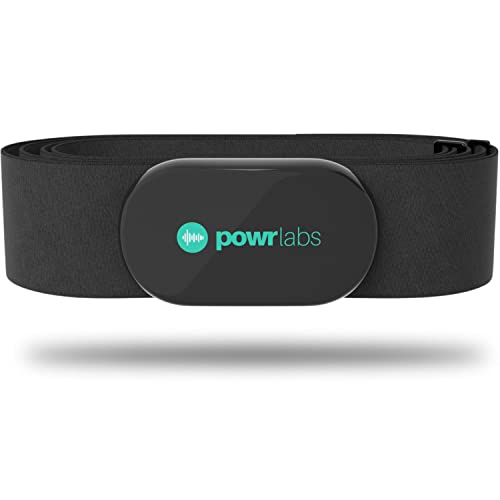
- ANT+ and Bluetooth compatibility
- Soft, adjustable fabric strap
- More than 400 hours of battery life
Best For: Multi-platform training with Garmin, Peloton, and fitness apps
Zone-Guided Armband
C022Pro Optical Heart Rate Monitor

- 12.2g armband with washable elastic strap
- LED heart-rate-zone indicators
- Bluetooth and ANT+ connectivity
Best For: Runners, cyclists, and gym users wanting visible zone feedback
Long-Battery Chest Strap
CooSpo H808S Heart Rate Monitor
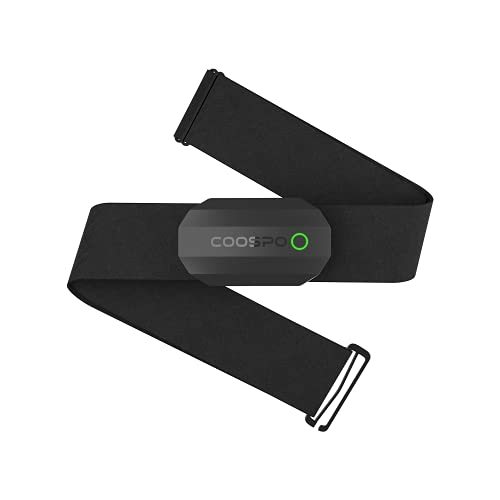
- 15g chest-strap sensor
- Up to 300 hours of battery life
- Bluetooth and ANT+ compatibility
Best For: Training users seeking long battery life and wide app support
Extended-Life Chest Strap

- 1,000-hour advertised battery life
- ANT+ and Bluetooth dual connectivity
- IP67 dustproof and waterproof rating
Best For: Frequent trainers using multiple fitness devices
Most Accurate Pick – Polar H10
For shoppers comparing lightweight heart rate monitors, the Polar H10 stands out for its stated measurement precision, broad connectivity, and waterproof chest-strap design. Its internal memory and long battery life also make it practical for training sessions without keeping a phone nearby.
Best For: Athletes who prioritize highly accurate readings and flexible device compatibility.
Pros:
- Designed for top-quality heart rate measurement.
- Supports Bluetooth, ANT+, and 5 kHz connections, including simultaneous Bluetooth connections.
- Waterproof, with internal memory for multiple hours of data.
- Battery lasts up to 400 hours, according to the supplied details.
Cons:
- Chest-strap format may not suit shoppers seeking a wrist-worn or fingertip monitor.
- Requires a CR2025 button-cell battery.
- The listed M-XXL size may not provide an ideal fit for every user.
The Polar H10 is a strong choice when accuracy and connectivity matter more than the simplest possible form factor. Its chest strap and replaceable battery make it especially suitable for structured workouts and frequent training.
Best for Garmin Users – Garmin HRM 200
The Garmin HRM 200 is a practical option among lightweight heart rate monitors for users already training with Garmin watches or cycling computers. It transmits real-time heart rate and heart rate variability data, while its washable strap and user-replaceable battery simplify ongoing use.
Best For: Garmin users who want a durable, low-maintenance chest-strap monitor.
Pros:
- Sends real-time heart rate and heart rate variability data to compatible devices and apps.
- Available in XS-S and M-XL strap sizes for a more tailored fit.
- Strap is machine washable for easier cleaning.
- Offers up to one year of battery life with a user-replaceable battery.
Cons:
- Its strongest compatibility focus is Garmin equipment and compatible apps.
- Uses a chest strap rather than a watch or standalone display.
- Has a 3 ATM water rating, so it is not described as fully waterproof.
Choose the HRM 200 if you want straightforward Garmin integration, long battery service, and easy strap maintenance. The two available size ranges are useful for shoppers who need a closer fit.
Best Rechargeable Option – Wahoo TRACKR
The Wahoo TRACKR is a lightweight heart rate monitor built around a slim chest strap and rechargeable power. It connects through Bluetooth and ANT+ to smartphones, fitness equipment, training apps, and accessories, making it a versatile choice for connected workouts.
Best For: Connected athletes who prefer rechargeable power and a comfortable strap.
Pros:
- Provides real-time heart rate data for training.
- Supports both ANT+ and Bluetooth connectivity.
- Rechargeable battery provides more than 100 hours of active life, with supplied details listing up to 200 hours.
- Slim strap and LED indicators support comfort and connection awareness.
Cons:
- Requires recharging rather than a simple battery replacement.
- Listed compatibility details specifically identify smartphones, so other device support should be checked before purchase.
- Available in one size, which may not suit every body type.
TRACKR makes the most sense for users who regularly train with apps or equipment and do not want to keep buying button-cell batteries. Its rechargeable design and dual connectivity are useful, though fit and device compatibility deserve a quick check.
Best for Spot Checks – KardiaMobile 1-Lead EKG
KardiaMobile takes a different approach from chest-strap lightweight heart rate monitors: it is a compact, smartphone-based 1-lead EKG device for brief rhythm checks. Place your fingers on its sensors near a compatible smartphone and receive a result in about 30 seconds, without a subscription or cables.
Best For: Smartphone users who want convenient, occasional heart-rhythm checks.
Pros:
- Compact design weighs about 0.02 kg.
- Provides results in 30 seconds.
- Works with most smartphones and does not require Bluetooth, Wi-Fi, cords, or a PC.
- Described as an FDA-cleared personal heart monitor.
Cons:
- It is designed for spot checks rather than continuous workout heart-rate tracking.
- Requires a compatible smartphone for use.
- Battery life is listed at 12 months.
KardiaMobile is a good fit when portability and quick rhythm checks matter more than live exercise tracking. Shoppers seeking continuous workout data should look instead at a dedicated chest-strap monitor.
Best Armband Pick – COROS Heart Rate Monitor
For athletes seeking lightweight heart rate monitors without a chest strap, this COROS armband offers a breathable, flexible fit and automatic wear detection. It connects to up to three devices at once over Bluetooth and provides up to 38 hours of operation per charge.
Best For: Sports and workout tracking with COROS watches, apps, and Bluetooth-compatible fitness equipment.
Pros:
- Soft, breathable fabric band designed for comfortable sports use.
- Pairs with up to three devices simultaneously through Bluetooth.
- Wear detection automatically powers the monitor on and off.
- Provides up to 38 hours of operation and 80 days of standby.
Cons:
- Bluetooth only; it is not compatible with ANT+.
- Designed for sports and activity monitoring rather than daily tracking.
- A Type-C adapter is not included.
The COROS is a strong choice if an armband format matters more than ANT+ support. Its washable band, multi-device Bluetooth pairing, and automatic wear detection make it convenient for focused workouts.
Best Long-Battery Pick – GEOID HS500 Heart Rate Monitor
The GEOID HS500 is one of the more practical lightweight heart rate monitors for users who want broad device compatibility and minimal charging. Its chest strap supports both ANT+ and Bluetooth, while the replaceable CR2032 battery is rated for up to 800 hours.
Best For: Runners, cyclists, and fitness users connecting a chest strap to phones, sports watches, bike computers, or training apps.
Pros:
- Supports both ANT+ and Bluetooth connections.
- Up to 800 hours of battery life with a replaceable CR2032 battery.
- IP67 waterproof rating for exercise use.
- LED indicator confirms readiness and connection status.
Cons:
- Swimming is not recommended.
- Bluetooth pairing should be completed through the fitness app rather than directly through phone settings.
- It uses a chest-strap design rather than an armband.
Choose the HS500 if battery longevity and connection flexibility are priorities. Its ANT+/Bluetooth support suits mixed training setups, and the replaceable battery reduces charging interruptions.
Best Dual-Connection Value – POWR LABS Heart Rate Monitor
The POWR LABS chest strap combines a lightweight profile with dual ANT+ and Bluetooth connectivity, making it a versatile option among lightweight heart rate monitors. Its soft, seamless fabric adjusts across a broad chest range and is rated for more than 400 hours of battery life.
Best For: Cyclists and endurance athletes using Garmin, Wahoo, Polar, Peloton, cycling computers, smartwatches, or fitness apps.
Pros:
- Works with ANT+ and Bluetooth devices and more than 400 fitness apps.
- Soft, seamless fabric is designed to reduce chafing and slipping.
- Replaceable battery provides more than 400 hours of use.
- IPX67 sweatproof and water-resistant construction.
Cons:
- The strap must be worn before pairing.
- It is a chest strap, which may not suit users who prefer armbands.
- Swimming under a wetsuit is supported in the notes, but the product is described as water resistant rather than fully waterproof.
The POWR LABS model is a useful value-oriented choice for athletes who need both major wireless protocols. Its comfortable fabric and replaceable battery make it well suited to recurring training sessions across multiple platforms.
Zone-Guided Armband – C022Pro Optical Heart Rate Monitor
For shoppers comparing lightweight heart rate monitors, the C022Pro stands out as a compact armband with optical tracking and visible heart-rate-zone feedback. Its dual Bluetooth and ANT+ connectivity makes it suitable for pairing with phones, fitness equipment, watches, and bike computers.
Best For: Runners, cyclists, and gym users who want zone guidance without wearing a chest strap.
Pros:
- Lightweight 12.2g design with a washable elastic strap.
- LED indicators show warm-up, fat-burn, aerobic, anaerobic, and maximum-effort zones.
- Bluetooth and ANT+ support broad device compatibility.
- 30m waterproof rating supports use in varied weather conditions.
Cons:
- Optical sensors may be less suitable than a chest strap for shoppers who specifically prefer chest-based monitoring.
- The notes do not specify battery life.
The C022Pro is a practical lightweight heart rate monitor for users who value quick visual zone feedback and flexible connectivity. Its armband format may also appeal to those who find chest straps less comfortable.
Long-Battery Chest Strap – CooSpo H808S Heart Rate Monitor
The CooSpo H808S is one of the more practical lightweight heart rate monitors for training sessions that demand a traditional chest-strap fit. It combines Bluetooth and ANT+ transmission with a replaceable CR2032 battery rated for up to 300 hours.
Best For: Athletes and indoor-cycling users who need broad app compatibility and extended battery life.
Pros:
- Lightweight 15g sensor with a low-profile chest-strap design.
- Bluetooth 4.0 and ANT+ support simultaneous or flexible device connections.
- 300-hour replaceable-battery life reduces frequent charging.
- IP67 waterproofing supports exercise in wet conditions.
Cons:
- The electrode areas should be moistened before use.
- The strap is recommended for replacement after six months or 300 washes.
- Pairing should be completed inside the fitness app rather than the phone’s Bluetooth settings.
Choose the H808S if reliable chest-strap placement, long battery life, and compatibility with platforms such as Peloton, Strava, Wahoo, Polar Beat, and Zwift matter more than a built-in display.
Extended-Life Chest Strap – Magene H64 Heart Rate Monitor
The Magene H64 is a lightweight heart rate monitor built for frequent training, with a chest-strap sensor, optimized detection hardware and algorithms, and an advertised 1,000-hour battery life. ANT+ and Bluetooth allow it to send workout data to compatible apps, watches, bike computers, and fitness equipment.
Best For: Frequent cyclists, indoor trainers, and multi-device users who want exceptionally long battery life.
Pros:
- Advertised 1,000-hour battery life for reduced maintenance.
- ANT+ and Bluetooth can provide two data connections for one workout.
- IP67 dustproof and waterproof construction.
- Compatible with apps and equipment including Zwift, Strava, Wahoo, Peloton, and TrainerRoad.
Cons:
- The battery-life figure is based on laboratory testing and may vary in actual use.
- The electrode area must be moistened and positioned correctly for detection.
- Phone pairing needs to be done through the app rather than system Bluetooth settings.
The H64 is a strong fit for users who train often and want to avoid regular battery changes. Its broad ANT+ and Bluetooth support also makes it useful across cycling, indoor-training, and fitness setups.
How We Picked These Lightweight Heart Rate Monitors
We selected models that prioritize a low-profile fit, dependable heart-rate tracking, and broad device compatibility. The list includes chest straps, optical armbands, and a single-lead EKG monitor because different users need different types of feedback. We considered ANT+ and Bluetooth support, waterproofing, battery life, auto-wear features, app compatibility, and practical use with running, cycling, gym equipment, and training platforms.
Chest straps generally provide the most responsive workout data, while armbands can be easier to put on and more comfortable for users who dislike a chest sensor. The KardiaMobile option serves a different purpose: it is intended for spot-checking heart rhythm rather than continuously broadcasting exercise data.
Quick Comparison
| Best For | Recommended Type | What to Look For |
|---|---|---|
| High-intensity training | Chest strap | Secure fit, fast response, ANT+ and Bluetooth |
| Comfort and easy setup | Armband | Adjustable band, optical sensor, zone indicators |
| Multi-device workouts | Dual-protocol monitor | Simultaneous or flexible ANT+/Bluetooth pairing |
| Heart-rhythm spot checks | Single-lead EKG | App reporting and clinically oriented rhythm detection |
Key Buying Factors for Lightweight Heart Rate Monitors
Wearing Style and Comfort
Chest straps sit close to the heart and are usually the strongest choice for interval training, cycling, and other activities where rapid changes matter. Look for an adjustable, moisture-resistant strap and a sensor that can be removed for washing. Armbands may feel less restrictive, but optical accuracy can vary with fit, skin contact, movement, and placement.
Connectivity and Compatibility
ANT+ works well with many bike computers, watches, and gym devices, while Bluetooth is useful for phones, tablets, and apps. If you switch between platforms, choose a monitor supporting both standards. Confirm compatibility with your specific Garmin, Peloton, cycling computer, or training app before buying.
Battery, Water Resistance, and Maintenance
Long battery life reduces interruptions, especially for frequent training. Rechargeable models can be convenient, while replaceable-cell designs may be easier to keep running over several years. For sweaty workouts or outdoor use, prioritize a water-resistant or waterproof sensor and follow the manufacturer’s cleaning instructions.
Workout Data Versus Health Monitoring
Most fitness heart-rate monitors are designed to measure pulse during exercise, not diagnose medical conditions. A single-lead EKG product has a different role and may help record rhythm information for review, but it should not replace professional medical advice. Seek medical care for concerning or persistent symptoms.
Who Should Buy Which Lightweight Heart Rate Monitors?
- Choose the Polar H10 or Garmin HRM 200 if you want a trusted chest-strap format for structured training and broad ecosystem support.
- Choose the Wahoo TRACKR if your workouts center on connected cycling, indoor training, or app-based sessions.
- Choose the COROS monitor if auto-wear detection and a simple training-focused experience are priorities.
- Choose an HS500, POWR LABS, COOSPO H808S, or Magene H64 if you want dual ANT+/Bluetooth connectivity and practical value.
- Choose the C022Pro armband if you prefer an optical sensor and a less restrictive fit.
- Choose KardiaMobile for portable, occasional rhythm recordings rather than continuous exercise tracking.