Choosing the right phone can make daily calls less frustrating and far easier to follow. For seniors with hearing loss, the best amplified models combine louder audio, simpler controls, and clear visual alerts.
Below, we focus on practical options that help with real-world use at home, from big-button corded phones to cordless systems with stronger volume boost and answering features.
Best 10 Hearing Care Amplified Telephone for Seniors Picks for 2026
Premium Amplified Cordless Choice
Panasonic 1-Handset Amplified Wireless Phone

- Up to 40 dB voice boost
- Slow Talk and talking caller ID
- 100 dB loud visual ringer
Best For: Seniors who need a cordless phone with strong amplification and easy-to-read controls
Photo Button Simplicity Pick
Serene Amplified Big Button Landline Phone

- 26 dB incoming sound amplification
- Photo speed-dial buttons for easy recognition
- 85 dB loud ringer
Best For: Seniors with hearing, vision, or memory challenges who prefer a simple corded phone
Dual-Handset Hearing Helper
Panasonic Amplified Cordless Phone Set
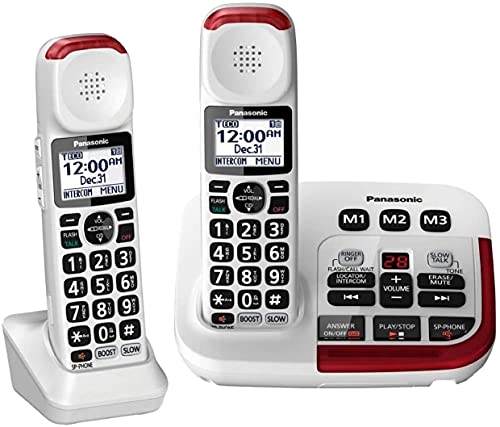
- Up to 40 dB volume boost
- Noise reduction and Slow Talk
- Two handsets with visual ringers
Best For: Households that need an amplified cordless phone with multiple handsets
Classic Corded Amplified Pick

- Up to 26 dB sound amplification
- Adjustable ringer pitch and volume
- Large buttons and corded reliability
Best For: Seniors with mild to moderate hearing loss who want a straightforward corded phone
Budget Wired Option
Amplified 110dB Large Button Corded Phone
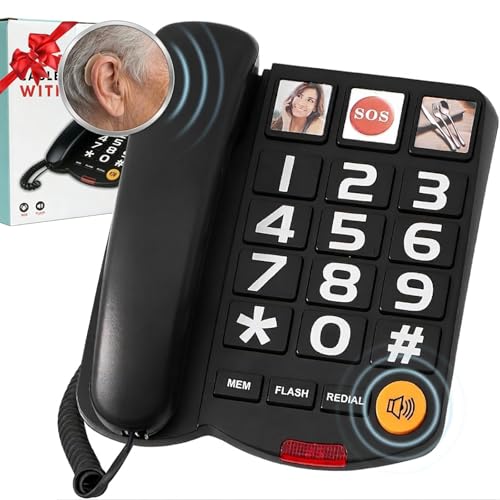
- 110dB incoming ringer
- Up to 80dB receiver gain
- 3 photo speed-dial buttons
Best For: Seniors who want a simple, loud corded phone with picture dialing.
Portable Loud Call Choice
Clarity XLC3.4+ Amplified Cordless Phone

- Up to 50dB amplification and 15dB outgoing boost
- Talking caller ID and keypad
- 95dB ringer with visual alert
Best For: Portable cordless calling with strong volume
Easy-Read Dual Handset Pick
SWISSVOICE 3355 Big Button Phone

- Large photo buttons with SOS key
- Ringer adjustable up to 90dB
- Includes corded base and cordless handset
Best For: Easy-to-read calling with very loud alerts
Premium Amplified Cordless Choice – Panasonic 1-Handset Amplified Wireless Phone
If you’re comparing a hearing care amplified telephone for seniors, this Panasonic cordless model stands out for everyday clarity and ease of use. It adds up to 40 dB of voice boost, a loud 100 dB base ringer, Slow Talk, and visual cues that help make calls easier to follow.
Best For: Seniors who want a cordless amplified phone with strong volume, speech help, and visibility features.
Pros:
- Up to 40 dB volume boost for louder incoming calls
- Slow Talk button helps slow speech in real time and on voice messages
- Loud visual ringer up to 100 dB with talking caller ID and talking keypad
- Large backlit LCD and backlit buttons improve readability in low light
Cons:
- Requires rechargeable batteries and a base unit setup
- May be more feature-rich than needed for users who want a basic phone
Overall, this is a strong option if you want a senior-friendly cordless phone with a broad set of hearing and visibility aids. It balances amplification, speech assistance, and call-management tools in one practical package.
Photo Button Simplicity Pick – Serene Amplified Big Button Landline Phone
For a hearing care amplified telephone for seniors that keeps things simple, this Serene Innovations corded phone focuses on straightforward calling and easy recognition. It combines 26 dB sound amplification with oversized photo speed-dial buttons, a loud ringer, and a design that doesn’t depend on household power.
Best For: Seniors with hearing, vision, or memory challenges who need a simple corded phone with photo buttons.
Pros:
- Amplifies incoming sound up to 26 dB
- Photo speed-dial buttons support memory and visual recognition
- 85 dB ringer is loud enough to stand out over background noise
- Powered by the phone line, so it does not rely on mains power
Cons:
- Corded design offers less mobility than a cordless phone
- Fewer advanced features than some amplified senior phones
This is a practical choice when simplicity matters more than extra functions. The large photo buttons and dependable corded operation make it especially useful for users who want an easy-to-understand home phone.
Dual-Handset Hearing Helper – Panasonic Amplified Cordless Phone Set
If you need a hearing care amplified telephone for seniors with more flexibility around the home, this Panasonic two-handset set adds the same core clarity features in a larger package. It offers up to 40 dB volume boost, Slow Talk, noise reduction, talking caller ID, and bright visual indicators on both the base and handset.
Best For: Households that want an amplified cordless phone with two handsets and strong hearing-assist features.
Pros:
- Up to 40 dB voice volume boost for clearer calls
- Noise reduction helps cut background interference
- Slow Talk, talking caller ID, and talking keypad support easier listening
- Dual handsets and expandable system improve household coverage
Cons:
- More expensive and complex than a basic corded phone
- Requires battery-powered cordless setup
This model makes sense if you want amplified calling plus extra convenience for multiple rooms. The combination of volume, speech support, and visual alert features makes it a well-rounded senior phone option.
Classic Corded Amplified Pick – Clarity P300 Landline Phone
For buyers focused on a hearing care amplified telephone for seniors, this Clarity corded phone keeps the feature set focused on the essentials. It amplifies incoming sound up to 26 dB, adds adjustable ringer pitch and volume, and uses a straightforward corded design for reliable day-to-day calling.
Best For: Seniors with mild to moderate hearing loss who want a simple amplified corded phone.
Pros:
- Amplifies incoming sound up to 26 dB
- Adjustable ringer pitch and volume help tailor alerts
- Large buttons are easier for users with limited dexterity or vision challenges
- Standard phone jack connection avoids dependence on wireless signals
Cons:
- Requires a 9V battery for certain functions
- Offers fewer advanced communication features than cordless alternatives
This is a solid no-frills option if you want dependable amplification without extra complexity. It works best for users who prioritize simplicity, clear sound, and a familiar corded layout.
Recommended Cordless Pick – VTech Amplified Cordless Senior Phone
If you’re shopping for a hearing care amplified telephone for seniors, this cordless VTech model is built for loud, clear calling with fewer hassles. It combines a 90dB ringer, 50dB audio boost, big buttons, and a large backlit display, while also adding call blocking and a digital answering machine.
Best For: Seniors who want an easy-to-use cordless phone with strong volume, visual alerts, and call blocking.
Pros:
- 90dB extra-loud ringer with flashing visual indicator
- One-touch Audio Assist boosts volume up to 50dB
- Big buttons and extra-large backlit display for easier dialing
- Blocks up to 1,000 robocalls and unwanted numbers
Cons:
- Requires charging and battery use like other cordless phones
- Single-line cordless system may not suit multi-line setups
This is a strong all-around choice if you want hearing support plus everyday convenience. The cordless design, caller screening tools, and photo dial make it especially practical for seniors who want both accessibility and flexibility.
Budget Wired Option – Amplified 110dB Large Button Corded Phone
This amplified telephone for seniors keeps things simple with a wired design, oversized buttons, and strong audio output. It’s aimed at hearing-impaired users who want a straightforward landline phone with photo speed dial, a loud ringer, and hands-free calling.
Best For: Seniors who prefer a dependable corded phone with loud volume and easy one-touch dialing.
Pros:
- Incoming ringer reaches up to 110dB
- Handset volume control offers up to 80dB receiver gain
- 3 photo speed dial buttons plus 10 two-touch memories
- LED flashing light helps you notice incoming calls
Cons:
- Not intended for profound hearing loss
- Wired design offers less mobility than cordless options
This model is a practical pick when simplicity matters more than advanced features. It delivers the key senior-friendly basics—loud sound, large buttons, and picture dialing—without the complexity of a cordless system.
Hybrid Power Pick – VTech SN5147 Corded/Cordless Senior Phone
For a hearing care amplified telephone for seniors that keeps working when the power goes out, this VTech hybrid combines a corded base with one cordless handset. It adds a 90dB ringer, 50dB audio assist, big buttons, a large backlit display, and a 22-minute answering machine.
Best For: Seniors who want the reliability of a corded base plus the convenience of a cordless handset.
Pros:
- Corded base works during power outages
- 90dB extra-loud ringer with flashing visual indicator
- One-touch Audio Assist boosts volume up to 50dB
- Call blocker handles up to 1,000 robocalls and unwanted numbers
Cons:
- More components than a basic single-phone setup
- Requires both corded and cordless charging accessories
This is the most versatile option in the group if you want backup reliability and mobility in one package. It pairs senior-focused accessibility features with the reassurance of a corded base, making it a smart everyday phone for hard-of-hearing users.
Captioned Clarity Pick – Hamilton CapTel 2400iSPNBT Captioned Telephone
If you want a hearing care amplified telephone for seniors that does more than simply make sound louder, this captioned phone is built to help you follow both sides of the conversation. It combines up to 40dB amplification with real-time captions on a large touchscreen, so calls are easier to understand even when speech is unclear.
Best For: Seniors and hard-of-hearing users who want live captions plus amplified calling in one landline phone.
Pros:
- Real-time captions appear on the large touchscreen for incoming and outgoing calls.
- Amplified sound up to 40dB with hearing aid compatibility.
- Choose auto captions or assisted captions with live operator support.
- Built-in answering machine shows voicemail captions on-screen.
Cons:
- Requires high-speed internet and registration for US residents with hearing loss.
- Needs standard electrical power to operate.
For buyers who struggle most with understanding words rather than just hearing ring volume, this model stands out because it adds captions to amplification. The large screen, captioned voicemail, and simple on-screen controls make it a practical upgrade for everyday home calling.
Portable Loud Call Choice – Clarity XLC3.4+ Amplified Cordless Phone
This hearing care amplified telephone for seniors focuses on loud, adjustable sound in a cordless design that is easy to move from room to room. With up to 50dB amplification, outgoing speech boost, and tone control, it’s a practical pick for households that want clear calls without being tied to a base.
Best For: Seniors who want a portable amplified cordless phone with strong volume and simple controls.
Pros:
- Up to 50dB amplification for incoming sound.
- Amplifies outgoing speech up to 15dB.
- Talking caller ID and talking keypad improve usability.
- Extra-loud 95dB ringer with visual ring indicator.
Cons:
- Uses batteries and backup power, so upkeep is more involved than corded models.
- Only up to 3 additional handsets can be added.
The XLC3.4+ is a strong fit if portability matters as much as loudness. Its boost override, tone settings, and battery backup make it especially useful for seniors who want a dependable cordless phone that stays easy to use.
Easy-Read Dual Handset Pick – SWISSVOICE 3355 Big Button Phone
For shoppers looking for a hearing care amplified telephone for seniors with very easy-to-see controls, this corded-and-cordless combo focuses on oversized buttons, loud ringing, and simple call handling. It includes a base unit with a corded phone plus an additional cordless handset, making it a flexible option for home use.
Best For: Older adults who want big buttons, very loud ringing, and a mixed corded/cordless setup.
Pros:
- Extra-large photo memory buttons, including an SOS button.
- Adjustable ringer volume up to 90dB.
- Hearing aid compatible and easy to adjust for louder calls.
- Includes a corded base unit and an additional cordless handset.
Cons:
- Dual-handset setup may be more than some buyers need.
- Focuses on simplicity rather than advanced captioning features.
This model is a good match when visibility and loud alerting are the top priorities. The big-button layout, call block feature, and included extra handset make it a sensible home phone for users who want straightforward access to calling.
How We Picked the Best Hearing Care Amplified Telephone for Seniors
We focused on features that matter most in a Hearing Care Amplified Telephone for Seniors: strong audio boost, easy-to-read buttons, loud ringer options, hearing-aid compatibility, and controls that reduce confusion. We also favored phones with useful extras like photo dialing, call blocking, answering machines, and clear speakerphone performance.
Quick Comparison
In general, corded models are best for reliability and maximum simplicity, while cordless phones offer more mobility around the home. Captioned phones are ideal for people who struggle most with speech clarity, and big-button models work well for users who want the least complicated setup. If you need the loudest alerts, look for higher ringer volume and visual ring indicators.
Key Buying Factors for Hearing Care Amplified Telephone for Seniors
Volume Boost and Voice Clarity
Check how much amplification the phone offers for incoming speech and whether it includes extra sound processing like slow talk or audio assist. A stronger boost can help, but clarity matters just as much as raw volume.
Ringer Loudness and Alerts
A loud ringer is important, especially in larger homes or for users who may not wear hearing aids all the time. Visual flashing indicators can add another layer of notice.
Ease of Use
Large buttons, photo speed dial, straightforward menus, and a high-contrast display can make a major difference. For many buyers, simple controls are more valuable than advanced features they will not use.
Landline, Cordless, or Captioned
Choose a corded phone if you want dependable power and a very simple desktop setup. Choose cordless if you want mobility. Consider a captioned phone if understanding speech is the biggest challenge, since seeing the conversation can be easier than relying on audio alone.
Who Should Buy Which Hearing Care Amplified Telephone for Seniors?
Buy a big-button corded phone if you want the simplest, most dependable option. Choose an amplified cordless phone if you need to move around the house while talking. Pick a model with call blocking if nuisance calls are a problem. If hearing speech clearly is the main issue, a captioned telephone may be the best fit. For households supporting an older adult or someone with dementia, photo buttons and simplified dialing can reduce mistakes and make calling more comfortable.