Finding a running watch that fits a smaller wrist comfortably can be surprisingly difficult. Oversized cases may bounce during workouts, feel bulky during sleep, or make everyday wear less convenient.
This roundup compares compact Garmin models and simpler fitness trackers across GPS accuracy, training features, health tracking, battery expectations, and overall value, so you can choose a comfortable watch that matches your running routine.
Best 10 Running Watches for Small Wrists Picks for 2026
Best Overall

- Compact 42 mm case for smaller wrists
- Built-in multi-band GPS with SatIQ
- Training readiness and race-adaptive guidance
Best For: Runners seeking advanced training features in a compact watch
Best Budget Smartwatch

- 100+ sports modes with running auto-detection
- Bluetooth calling and app notifications
- Smartphone-dependent GPS
Best For: Casual runners wanting calls, notifications, and fitness tracking
Best Renewed Value
Garmin Forerunner 265S Renewed
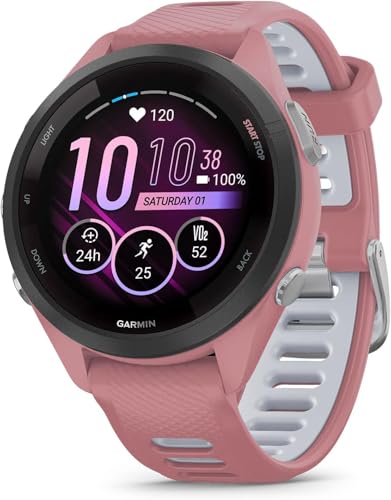
- 42 mm case fits 115–178 mm wrists
- AMOLED display with touchscreen and buttons
- Built-in GPS and advanced recovery metrics
Best For: Training-focused runners comfortable buying a renewed watch
Best Slim Tracker

- Slim 0.96-inch design for discreet wear
- Tracks activity, sleep, heart rate, and SpO2
- Up to five days of battery life
Best For: Basic daily fitness tracking on a smaller wrist
Best Training Companion

- 42 mm size suits smaller wrists
- Up to 18 hours of GPS battery life
- Personalized plans and recovery guidance
Best For: Runners who want advanced training features in a compact case
Best Budget Fitness Tracker
Bakoor 1.10-inch AMOLED Tracker

- Compact, lightweight AMOLED design
- 25 sports modes with connected GPS
- Up to 7 days of battery life
Best For: Casual runners seeking affordable everyday activity tracking
Simple-Use Pick

- Tracks running, walking, steps, heart rate, and sleep
- Basic use does not require an app or phone
- 5- to 7-day battery with IP68 water resistance
Best For: Simple everyday fitness tracking
Compact Lifestyle Pick

- Compact 35 mm smartwatch with a listed 0.8-ounce weight
- Tracks health, wellness, and multiple activities
- Uses a compatible phone for outdoor GPS tracking
Best For: Small-wrist users who run with their phone
Best Overall – Garmin Forerunner 265S
The Garmin Forerunner 265S is a strong all-around choice among running watches for small wrists. Its lightweight 42 mm case, AMOLED touchscreen, physical buttons, built-in GPS, and detailed training tools make it practical for regular runners who want more than basic step tracking.
Best For: Runners who want advanced training guidance and reliable GPS in a compact design.
Pros:
- 42 mm design is intended for smaller wrists and includes both touchscreen and button controls.
- Up to 24 hours of GPS use and up to 15 days in smartwatch mode.
- Offers training readiness, HRV status, race-adaptive plans, and more than 30 activity profiles.
- Multi-band GNSS with SatIQ supports positioning accuracy while helping manage battery use.
Cons:
- Advanced features may be more than needed for casual activity tracking.
- Safety features require a compatible smartphone, setup, and network coverage.
- The supplied notes describe it as water resistant to 50 meters, rather than fully waterproof for every use.
For runners with smaller wrists, the 42 mm fit is the main appeal, while the combination of physical controls, training metrics, and built-in GPS makes this the most capable option in the group.
Best Budget Smartwatch – HOMOGO Fitness Smartwatch
This HOMOGO smartwatch is a versatile everyday option for shoppers comparing running watches for small wrists on a budget. It combines automatic walking and running detection with health monitoring, Bluetooth calling, notifications, and more than 100 sports modes, though GPS tracking depends on a smartphone.
Best For: Casual runners who prioritize smartwatch conveniences and broad activity tracking over standalone GPS.
Pros:
- Tracks heart rate, blood oxygen, stress, sleep, steps, calories, distance, and duration.
- Includes more than 100 sports modes and auto-detection for walking and running.
- Supports Bluetooth calls, notifications, custom watch faces, and two included bands.
- IP68 water resistance is suited to rain, sweat, hand washing, and shallow swimming.
Cons:
- GPS is provided through a smartphone rather than built into the watch.
- The 1.83-inch rectangular display may feel large on particularly small wrists.
- Water-resistance guidance advises avoiding hot water and seawater.
This is better suited to everyday fitness and connected-watch use than dedicated race training. Confirm the fit of the larger display and plan to carry a phone for route tracking.
Best Renewed Value – Garmin Forerunner 265S Renewed
The renewed Garmin Forerunner 265S offers the same compact 42 mm approach that makes it appealing among running watches for small wrists, along with a colorful AMOLED screen, physical controls, built-in GPS, and detailed recovery metrics. It is worth considering when the renewed condition fits your buying priorities.
Best For: Performance-focused runners looking for a compact Garmin feature set at renewed-product pricing.
Pros:
- Lightweight 42 mm design is specified for wrists measuring 115–178 mm.
- Provides up to 15 days of smartwatch battery life and up to 24 hours in GPS mode.
- Includes morning reports, training readiness, HRV status, sleep coaching, and adaptive workouts.
- Built-in multi-band GPS and more than 30 activity profiles support varied training.
Cons:
- As a renewed product, condition and included support should be checked before purchase.
- Safety and assistance features require a compatible smartphone and network coverage.
- Its extensive training data may be unnecessary for runners seeking simple tracking.
Functionally, this is the performance-oriented pick for a smaller wrist, but the renewed status makes it especially important to review the listing details, warranty, and condition before ordering.
Best Slim Tracker – C68L Fitness Tracker
The C68L is a simple, slim fitness tracker for shoppers who want a lightweight alternative when comparing running watches for small wrists. Its 0.96-inch display, activity tracking, heart-rate and blood-oxygen monitoring, and up to five days of battery life cover basic daily fitness needs without the complexity of a dedicated GPS running watch.
Best For: Small-wrist users seeking basic activity, sleep, and notification tracking in a slim band.
Pros:
- Slim-style design with a small 0.96-inch display and 45 g listed weight.
- Tracks steps, calories, distance, exercise time, heart rate, blood oxygen, and sleep stages.
- IP68 protection supports daily hand washing and swimming, with cautions against prolonged soaking.
- Includes call and message notifications, water reminders, sedentary reminders, and two strap colors.
Cons:
- The supplied notes do not list built-in GPS, so it is not suited to standalone route tracking.
- Battery life is listed at up to five days, shorter than the Garmin options.
- The small display may be less convenient for reading detailed workout information.
This tracker makes sense for basic wellness and activity monitoring, but runners who need pace, route, or advanced workout data should choose a watch with built-in GPS and dedicated training features.
Best Training Companion – Garmin Forerunner 570
The Garmin Forerunner 570 is a strong choice among running watches for small wrists, thanks to its 42 mm case and training-focused features. Its AMOLED touchscreen, physical buttons, built-in GPS, and extended battery life make it well suited to runners who want detailed workout and recovery guidance.
Best For: Runners and multisport athletes who want personalized training tools in a smaller watch size.
Pros:
- 42 mm case is designed to fit smaller wrists.
- Up to 18 hours of GPS use and up to 10 days in smartwatch mode.
- Garmin Coach plans, daily suggested workouts, training readiness, and training status provide useful guidance.
- Built-in microphone and speaker support calls when paired with a smartphone.
Cons:
- Its many training and recovery features may be more than casual runners need.
- Safety and calling features require a compatible paired smartphone.
Choose this model if training insight is your priority and you prefer physical controls alongside a bright display. It offers the most comprehensive running toolkit of the three options.
Best Budget Fitness Tracker – Bakoor 1.10-inch AMOLED Tracker
This Bakoor fitness tracker is a practical, lightweight option for shoppers seeking running watches for small wrists without a training-watch price. Its 1.10-inch AMOLED display, 25 sports modes, connected GPS, and health-tracking features cover everyday activity and basic workout tracking.
Best For: Casual runners and everyday users who want activity tracking, notifications, and a compact touchscreen.
Pros:
- Lightweight design with a compact 1.10-inch AMOLED screen.
- Tracks activity across 25 sports modes, including exercise time, distance, and heart rate.
- Up to 7 days of battery life and IP68 water resistance.
- Supports call, message, social notification, sleep, hydration, and sedentary reminders.
Cons:
- GPS is provided through a connected smartphone rather than built in.
- Health measurements are intended for reference and do not replace medical advice.
- It offers fewer dedicated running and training features than the Garmin models.
This is the better fit for basic tracking and smart notifications on a smaller wrist. Consider it if phone-connected GPS meets your needs and you value a low-maintenance daily wearable.
Best Stylish Small Watch – Garmin Lily 2 Active
The Garmin Lily 2 Active combines a small 38 mm case with a fashion-focused design, making it one of the most appealing running watches for small wrists. Built-in GPS, running plans, health monitoring, and up to nine days of battery life give it useful fitness capability without a bulky look.
Best For: Runners who want a discreet, stylish watch for workouts and everyday wear.
Pros:
- Small 38 mm metal case and silicone band suit smaller wrists.
- Built-in GPS supports outdoor activity tracking without relying on a phone for GPS.
- Up to 9 days of battery life in smartwatch use.
- Includes Garmin Coach plans, on-screen workouts, sleep score, Body Battery, and stress tracking.
Cons:
- Its smaller, style-led design may be less suited to runners wanting extensive training metrics.
- Some smart features require pairing with a smartphone.
The Lily 2 Active is a well-rounded middle ground: smaller and more style-conscious than a conventional running watch, but more capable for training than a basic activity tracker. It is especially attractive for wearing from workouts into daily life.
Simple-Use Pick – No-Phone Fitness Tracker
For shoppers comparing running watches for small wrists, this LIVIKEY tracker focuses on straightforward fitness basics rather than a full smartwatch experience. It can track steps, calories, distance, heart rate, sleep, and multiple sports, while its 5- to 7-day battery life supports regular use.
Best For: Runners and walkers who want an uncomplicated tracker with optional smartphone connectivity.
Pros:
- Works as a tracker without requiring an app or phone connection for basic use.
- Includes running and walking modes, step tracking, heart-rate monitoring, and sleep monitoring.
- IP68 water resistance and 5- to 7-day battery life suit everyday workouts.
Cons:
- GPS is available only through a smartphone.
- It cannot make calls or send texts.
- The supplied notes do not specify a small-wrist fit or adjustable wrist circumference.
This is a practical choice if simple operation matters more than built-in GPS or advanced training features. Confirm the band fit before buying if your wrist is especially narrow.
Built-In GPS Pick – Garmin Lily 2 Active
The Garmin Lily 2 Active is a strong option among running watches for small wrists, with a stated fit for 110-175 mm wrists and a 38 mm case. It adds built-in GPS, running-focused Garmin Coach plans, health tracking, and up to nine days of battery life in a compact, style-conscious design.
Best For: Small-wrist runners who want built-in GPS, training guidance, and broad health features.
Pros:
- Fits wrists measuring 110-175 mm and has a compact 38 mm case.
- Built-in GPS tracks outdoor activities without relying on a connected phone for location data.
- Offers Garmin Coach plans for 5K, 10K, and half-marathon training.
- Up to nine days of battery life, plus health, workout, and notification features.
Cons:
- Smart notifications require pairing with a smartphone.
- Garmin Pay requires a supported country and payment network.
- Its water rating is listed as water resistant rather than fully waterproof.
Among these options, this is the most complete running package for a smaller wrist. Choose it if built-in GPS and structured training matter more than having the simplest possible tracker.
Compact Lifestyle Pick – Garmin Lily 2
The Garmin Lily 2 is a compact 35 mm smartwatch suited to shoppers seeking running watches for small wrists, although its GPS depends on a compatible smartphone. It combines health monitoring, sports apps, safety features, and up to five days of battery life in a small, stylish design.
Best For: Users who prioritize a compact smartwatch and phone-assisted run tracking.
Pros:
- Small 35 mm design and lightweight 0.8-ounce listed weight.
- Tracks health metrics including sleep, heart rate, stress, respiration, and Body Battery.
- Supports outdoor run tracking through a compatible smartphone’s GPS.
- Includes LiveTrack, incident detection, and Assistance when paired with a smartphone.
Cons:
- It does not have built-in GPS; outdoor GPS tracking requires a compatible phone.
- Battery life is up to five days, shorter than the Lily 2 Active.
- Safety features require smartphone setup, network coverage, and data connectivity.
The Lily 2 makes sense for smaller-wrist users who usually carry a phone and want a discreet watch for wellness and activity tracking. Consider the Lily 2 Active instead if phone-free GPS running is important.
How We Picked the Best Running Watches for Small Wrists
We focused on watches with compact cases, wearable designs, and features that are useful for runners without making the device unnecessarily bulky. The selection includes dedicated GPS running watches, smaller smartwatches, renewed options, and basic fitness trackers. We considered wrist comfort, screen usability, workout tracking, heart-rate monitoring, water resistance, phone dependence, battery practicality, and the difference between premium training tools and budget-friendly step counters.
Because product needs vary, a small case alone does not make a watch ideal for running. A model should also stay secure during movement, provide readable workout data, and offer the sensors or connectivity you actually plan to use.
Quick Comparison
Garmin Forerunner models are the strongest choices for runners who want built-in GPS, structured workouts, pace data, and more advanced training metrics. The Forerunner 265S is a well-rounded compact option, while the Forerunner 570 adds newer training and smartwatch capabilities. A renewed 265S can reduce the price if you are comfortable with refurbished hardware.
The Garmin Lily 2 Active models offer a smaller, more lifestyle-focused design while retaining GPS and useful activity features. The Lily 2 is slimmer and stylish but is better suited to everyday wellness tracking than serious run training. Generic fitness trackers are most appropriate for step counts, basic heart rate, sleep information, and casual activity monitoring; feature sets, app support, and sensor accuracy can vary considerably.
Key Buying Factors for Running Watches for Small Wrists
Case Size and Comfort
Look beyond the advertised diameter. Case thickness, weight, strap flexibility, and the shape of the back can affect comfort just as much as width. A secure strap helps prevent bouncing and inaccurate readings during runs.
GPS and Workout Features
If you run outdoors, built-in GPS is more convenient than relying on a phone. Check whether the watch records pace, distance, routes, intervals, heart-rate zones, and structured workouts. Basic trackers may require a connected phone or may estimate distance from steps.
Screen and Controls
A smaller watch should still be easy to read while moving. AMOLED displays offer strong contrast and vibrant visuals, while physical buttons can be easier to operate with sweaty fingers than touch controls alone.
Health Tracking and Water Resistance
Heart-rate, sleep, activity, and recovery features can make a watch more useful between runs. Treat blood-pressure readings on consumer trackers as general wellness information, not medical measurements. Confirm the water-resistance rating if you swim or train in heavy rain.
Who Should Buy Which Running Watches for Small Wrists?
- Serious runners: Choose a compact Garmin Forerunner for GPS, training plans, detailed workout data, and better run-specific controls.
- Runners wanting style and versatility: Choose the Garmin Lily 2 Active for a smaller everyday design with GPS and fitness features.
- Budget-conscious buyers: Consider a renewed Forerunner or a basic fitness tracker, depending on whether GPS is essential.
- Casual walkers and wellness-focused users: A simple tracker can cover steps, distance, calories, heart rate, and sleep without the cost or complexity of a running smartwatch.
- People who dislike phone dependence: Prioritize a model with built-in GPS and onboard activity recording, and verify which features work independently before buying.