Vibrating foam rollers combine traditional self-myofascial release with adjustable percussion to help warm up muscles, ease post-workout tightness, and support mobility work.
Our 2026 roundup includes contoured rollers for the back and neck, firm high-density models for deep tissue work, and rechargeable options with multiple intensity levels.
Best 10 Vibrating Foam Rollers Picks for 2026
Best Premium Pick

- Five adjustable vibration intensities
- Firm EVA foam with wave grooves
- Up to 180 minutes of battery life
Best For: Full-body recovery with premium vibration control
Best Soft-Feel Option

- Softer firmness for comfortable rolling
- Durable solid-core EVA construction
- Multi-density pattern targets muscle tightness
Best For: Gentle, non-powered muscle recovery
Best for Back and Neck

- Contoured to target muscles beside the spine
- Five adjustable vibration settings
- Up to 200 minutes of battery life
Best For: Focused back and neck muscle relief
Best Non-Vibrating Value

- Extra-firm surface for deep compression
- Multi-density GRID pattern varies pressure
- Durable design maintains its shape
Best For: Firm manual rolling and targeted recovery
Best Compact Firm Roller
ProsourceFit 12-Inch Foam Roller

- Firm high-density EPP construction
- 300-pound maximum weight capacity
- Compact 12-inch travel-friendly size
Best For: Manual deep-pressure massage in small spaces
Best Zoned Massage Roller
321 STRONG 3-Zone Massage Roller
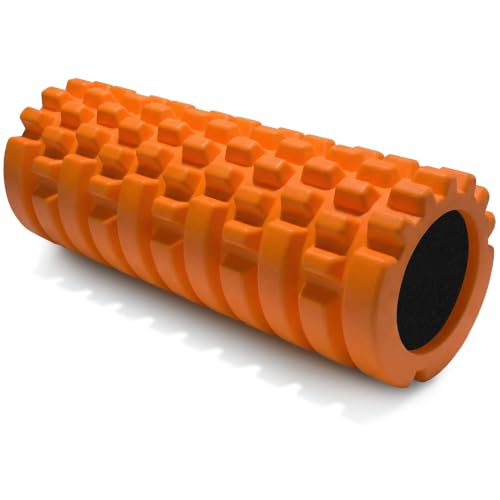
- Three projection zones vary massage pressure
- Medium-density EVA foam over EPP core
- Lightweight design for targeted rolling
Best For: Targeted manual pressure during stretching and recovery
Extra-Long Recovery Pick
Vulken 17-Inch Vibrating Foam Roller
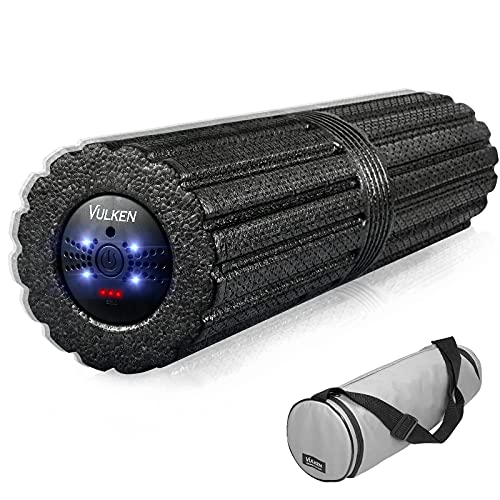
- 17-inch roller for wider muscle coverage
- Four vibration modes, including auto-pulsating
- Lightweight design with carrying bag
Best For: Full-body recovery and larger muscle areas
Simple Nonpowered Option
Amazon Basics 18-Inch High-Density Foam Roller
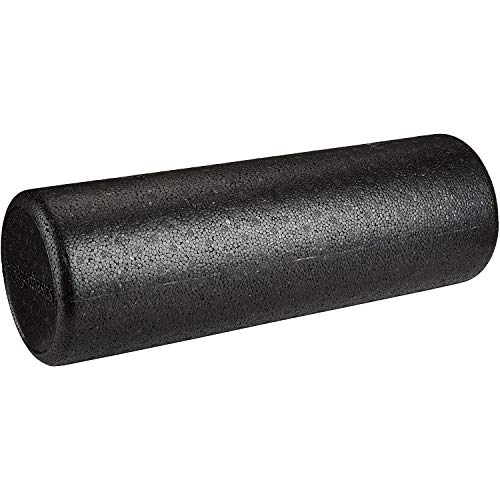
- Firm 18-inch roller for exercise and recovery
- Lightweight and easy to reposition
- No charging, controls, or vibration
Best For: Basic balance, flexibility, and recovery exercises
Adjustable Intensity Pick
PURSONIC VFR399 Vibrating Foam Roller

- Five vibration levels for gradual adjustment
- USB rechargeable for portable use
- Compact design with durable ABS and foam
Best For: Targeted warm-ups and post-workout recovery
Best Premium Pick – Therabody WaveRoller
The Therabody WaveRoller is a premium choice among vibrating foam rollers, combining firm, high-density EVA foam with five vibration settings. Its wide 12-inch rolling surface is designed for full-body use, while the silicone wave grooves add traction and pressure for larger muscle groups.
Best For: Full-body recovery and shoppers who want adjustable vibration with a premium feature set.
Pros:
- Five vibration intensities can be adjusted through the Therabody App.
- Firm, high-density foam and wave grooves provide deeper, targeted pressure.
- Offers up to 180 minutes of battery life and includes a protective pouch.
Cons:
- Its firm construction may feel intense for users who prefer softer rollers.
- At 2,840 grams, it is heavier than a basic foam roller.
Choose the WaveRoller if you want vibration, broad muscle coverage, and a durable firm surface in one recovery tool. The app control and included pouch add convenience, but its premium design may be more than casual users need.
Best Soft-Feel Option – TriggerPoint CORE Foam Roller
The TriggerPoint CORE is a practical alternative to vibrating foam rollers for shoppers who prefer a simpler, softer-feeling recovery tool. Its solid EVA foam core and multi-density GRID pattern provide targeted compression for muscle tightness, flexibility, and recovery.
Best For: Users who want a softer foam roller for general muscle recovery and larger muscle groups.
Pros:
- Soft firmness description is suited to users who find extra-firm rollers uncomfortable.
- Solid-core EVA construction is designed to be more durable than standard polypropylene.
- The 18-inch version is described as versatile for most muscle groups, with additional size options available.
Cons:
- It does not provide powered vibration.
- The supplied details cover multiple lengths, so the exact size should be confirmed before purchase.
The CORE is a straightforward choice for people who prioritize cushioning and durability over powered features. It is especially useful for broad muscle work, but shoppers specifically seeking vibrating foam rollers will need a different model.
Best for Back and Neck – Therabody WaveDuo
The Therabody WaveDuo is one of the most specialized vibrating foam rollers in this lineup. Its contoured shape is designed to sit along either side of the spine, while five vibration settings and silicone wave grooves help target back and neck tension without placing extra pressure directly on the spine.
Best For: Focused back and neck relief, especially around the muscles alongside the spine.
Pros:
- Contoured design targets back, neck, and spine-adjacent muscles.
- Five vibration intensities can be adjusted through the Therabody App.
- Provides up to 200 minutes of battery life and includes a carrying pouch.
Cons:
- Its specialized shape is less suited to full-body rolling than a standard roller.
- The firm construction may not suit users seeking gentle compression.
The WaveDuo makes the most sense when back and neck treatment is your priority. Its ergonomic contour offers a more targeted experience than a conventional cylinder, though that specialization limits its versatility for legs and other larger areas.
Best Non-Vibrating Value – TriggerPoint GRID 1.0
The TriggerPoint GRID 1.0 is a durable manual alternative to vibrating foam rollers, using a multi-density surface to vary pressure across different muscle areas. Its EVA-wrapped hollow core is described as extra firm, making it suitable for deeper compression and targeted recovery.
Best For: Users who want firm, customizable manual rolling for tight muscles, knots, and general recovery.
Pros:
- Three-dimensional GRID zones offer different ridges and nodules for varied pressure.
- Extra-firm EVA foam supports deeper, massage-like compression.
- Durable construction is designed to maintain its shape with repeated use.
Cons:
- It does not include vibration.
- The extra-firm surface may be too intense for beginners or sensitive muscles.
The GRID 1.0 is a strong pick if you value simple construction, firm pressure, and long-term repeat use. It cannot replicate the powered sensation of vibrating foam rollers, but its varied surface lets you adjust pressure manually.
Best Adjustable Vibrating Roller – FITINDEX Vibrating Foam Roller
If you want vibrating foam rollers with adjustable intensity, the FITINDEX model combines textured foam pressure with four vibration settings. It is designed for pre- and post-workout use and can be used across the back, legs, shoulders, arms, thighs, hamstrings, and other areas.
Best For: Users seeking a rechargeable, whole-body vibrating roller with multiple intensity options for exercise, massage, yoga, Pilates, or physical therapy routines.
Pros:
- Four vibration levels ranging from 1,400 to 2,600 RPM allow for customized intensity.
- Provides both foam-roller pressure and vibration for muscle-focused routines.
- Runs for over four hours per charge after approximately three hours of charging.
- Compact 15.8-inch design and approximately 2.1-pound weight support portability.
Cons:
- The firm construction may feel too intense for users who prefer gentler massage.
- It is larger and heavier than a basic compact foam roller.
The FITINDEX is the most feature-rich option here for shoppers who specifically want vibration and adjustable settings. Its rechargeable design also makes it practical for regular gym use or travel.
Best Compact Firm Roller – ProsourceFit 12-Inch Foam Roller
Although it is not powered, this firm ProsourceFit roller is a practical alternative for shoppers comparing vibrating foam rollers and traditional designs. Its high-density EPP construction delivers deeper pressure and the 12-inch length is convenient for travel or limited storage.
Best For: Beginners and experienced users who want a compact, firm roller for back, legs, calves, hamstrings, glutes, IT bands, yoga, Pilates, and post-workout recovery.
Pros:
- High-density foam maintains firmness under pressure and supports up to 300 pounds.
- Useful for multiple muscle groups, stretching, balance work, yoga, and Pilates.
- Water-resistant, hygienic, and made from recyclable expanded polypropylene.
- 12-inch size is suited to travel and space-saving storage.
Cons:
- It has no vibration function, so relief comes from manual rolling pressure.
- The firm density may feel sensitive for new users.
- The short length provides less coverage than the available full-length versions.
This ProsourceFit model makes sense when portability and firm manual pressure matter more than powered massage. It is a straightforward, low-maintenance choice with several size options available in the line.
Best Zoned Massage Roller – 321 STRONG 3-Zone Massage Roller
The 321 STRONG roller offers a targeted manual approach for shoppers considering vibrating foam rollers. Its three projection zones are designed to vary the feel from fingertip-like to thumb- and palm-like pressure, while the medium-density EVA foam provides a more comfortable balance than an especially firm roller.
Best For: Users who want targeted, adjustable-feeling pressure for back, neck, feet, arms, and post-exercise stretching without using an electric device.
Pros:
- Three massage zones provide different levels of targeted pressure.
- Medium-density foam is designed for effective but more comfortable soft-tissue work.
- Lightweight 12.5-inch design weighs approximately 8.64 ounces.
- BPA-free EVA foam wraps a strong EPP core without hard plastic projections.
Cons:
- It does not provide vibration or powered intensity adjustment.
- Its 12.5-inch length may offer less broad coverage than a full-size roller.
- The textured projections may not suit users who prefer a smooth roller surface.
Choose the 321 STRONG when massage-zone variety and a medium-density feel are more important than motorized vibration. It is especially suitable for users who want to focus pressure on specific areas during stretching or recovery.
Extra-Long Recovery Pick – Vulken 17-Inch Vibrating Foam Roller
The Vulken is a practical choice among vibrating foam rollers when you want broad muscle coverage. Its 17-inch length can reach more of the back and legs in one pass, while four vibration modes and a motor rated up to 3800 RPM let you adjust the massage to your routine.
Best For: Athletes and fitness users who want an extra-long roller for full-body recovery at home, the gym, or while traveling.
Pros:
- 17-inch surface covers larger muscle areas efficiently.
- Four modes include three intensity levels and an auto-pulsating setting.
- Lightweight 2.1-pound design includes a carrying bag.
- Rechargeable battery supports convenient regular use.
Cons:
- Its firm design and high vibration output may feel intense for some users.
- The longer profile may be less compact than a standard roller.
The Vulken stands out when coverage and adjustable vibration matter more than minimalist portability. It is a strong fit for users who want one roller for larger body areas and mobile recovery sessions.
Simple Nonpowered Option – Amazon Basics 18-Inch High-Density Foam Roller
Amazon Basics High-Density Foam Roller for Exercise and Recovery, 18 Inches, Black
Check Price On AmazonAlthough it is not a vibrating model, this Amazon Basics roller is a straightforward alternative for shoppers comparing vibrating foam rollers with traditional recovery tools. Its firm, high-density polypropylene construction supports balance, strengthening, flexibility, and recovery exercises without requiring charging or controls.
Best For: Users who prefer a basic, firm roller for exercise and recovery and do not need powered vibration.
Pros:
- 18-inch length provides a broad exercise and recovery surface.
- Firm construction is designed to maintain its shape.
- Lightweight at 0.27 kg and easy to reposition.
- Wipes clean easily after workouts.
Cons:
- It does not provide vibration or powered massage.
- The firm surface may not suit users seeking a softer feel.
This is the practical budget-style choice for uncomplicated foam rolling. Choose it when durability, easy cleaning, and low-maintenance use are more important than adjustable vibration.
Adjustable Intensity Pick – PURSONIC VFR399 Vibrating Foam Roller
The PURSONIC VFR399 is a compact vibrating foam roller for users who want more control over massage intensity. Five vibration levels allow gradual adjustment for warm-ups or post-exercise recovery, while the USB-rechargeable design is convenient for use at home, at the gym, or on the go.
Best For: Users who want five adjustable intensity levels in a portable roller for targeted muscle recovery.
Pros:
- Five intensity settings support gradual customization.
- Designed for both pre-workout warm-ups and post-exercise recovery.
- Compact, lightweight, and USB rechargeable.
- Uses durable ABS plastic and high-density foam.
Cons:
- Its 12-inch length offers less coverage than longer rollers.
- At 2 pounds, it is not the lightest option listed.
The PURSONIC offers a useful middle ground between portability and powered recovery. Its main advantage is fine intensity control, making it suitable for users who prefer to increase vibration gradually.
How We Picked the Best Vibrating Foam Rollers
We compared these rollers by construction, vibration control, roller size, surface design, portability, charging convenience, and intended use. We also considered whether each model suits broad muscle groups, targeted trigger-point work, or areas such as the neck and back. Because comfort and pressure tolerance vary, the list includes both softer and firmer designs rather than treating one density as best for everyone.
For powered models, useful features include multiple speeds, a rechargeable battery, stable operation, and controls that are easy to reach during use. For non-powered rollers, we prioritized dependable foam construction, practical dimensions, and massage textures that add pressure without making positioning unnecessarily difficult.
Quick Comparison
- Best for premium powered recovery: Therabody WaveRoller High-Density Vibrating Foam Roller.
- Best for targeted back and neck work: Therabody WaveDuo.
- Best for adjustable vibration on a budget: FITINDEX Vibrating Foam Roller.
- Best for extended coverage: Vulken 17-inch Vibrating Foam Roller or Amazon Basics 18-inch roller.
- Best for classic textured rolling: TriggerPoint Grid 1.0 or 321 STRONG 3-Zone Massage Roller.
- Best for simple, unpowered recovery: TriggerPoint CORE or ProsourceFit High-Density Foam Roller.
Key Buying Factors for Vibrating Foam Rollers
Vibration Settings and Battery
Multiple intensity levels make it easier to begin gently and increase pressure gradually. Check charging requirements, expected runtime, and whether the controls can be used without stopping your session. A rechargeable battery is convenient for frequent use, while a simpler roller avoids charging altogether.
Firmness and Surface Texture
High-density foam generally provides stronger, more consistent pressure, but it may feel too aggressive for beginners or sensitive areas. Grooves, ridges, and zones can improve targeted stimulation, whereas a smoother surface may feel more comfortable for larger muscle groups.
Length, Shape, and Portability
Long rollers cover more of the back, thighs, and legs with fewer repositioning movements. Shorter or contoured models can be easier to carry and may work better for targeted areas. A contoured neck-and-back design should be used according to its intended positioning rather than like a conventional full-length roller.
Safety and Technique
Use slow, controlled movements and moderate pressure. Avoid rolling directly over bones, joints, the front of the neck, open wounds, or areas of acute injury. Stop if you experience sharp pain, numbness, swelling, or unusual symptoms, and ask a qualified clinician for guidance if you have a medical condition or recent injury.
Who Should Buy Which Vibrating Foam Rollers?
Choose a premium vibrating model if you train frequently and want stronger control over recovery sessions. Pick a budget rechargeable roller if adjustable vibration matters but you do not need specialized shaping. Long rollers are useful for larger athletes or full-body routines, while compact and contoured designs are better for portability and targeted back or neck work.
If you are new to foam rolling, start with a moderate-density, non-powered model or the lowest vibration setting. Experienced users who prefer firm trigger-point pressure may benefit from high-density or multi-zone textures. The best Vibrating Foam Rollers are the ones whose firmness, size, and intensity you can use consistently without discomfort.