The best wooden slant boards make calf stretching, ankle mobility drills, and squat-position work easier to perform consistently. Adjustable angles and grippy surfaces help you fine-tune intensity without needing bulky equipment.
We compared 10 wooden options across adjustability, weight capacity, portability, stability, and versatility to help you choose the right board for home workouts, mobility routines, or physical therapy exercises.
Best 10 Wooden Slant Boards Picks for 2026
Best Overall
StrongTek Adjustable Wooden Slant Board

- Five angles from 15° to 35°
- 500-pound capacity with anti-slip tread
- Hardwood construction with side handle
Best For: Versatile stretching, mobility, and rehabilitation routines
Best Portable Pick
TEMI Portable Wooden Slant Board

- Lightweight design with built-in handle
- Four angles from 20° to 40°
- 500-pound capacity and non-slip surface
Best For: Portable calf stretching and ankle mobility work
Best Wide-Footprint Design
StrongTek 13-Inch Wooden Slant Board

- 13-inch-wide platform for natural foot placement
- Five settings from 15° to 35°
- Foldable design with anti-slip top and base
Best For: Squats, lunges, and mobility work needing extra stance width
Best With Exercise Guide
Professional Wooden Slant Board
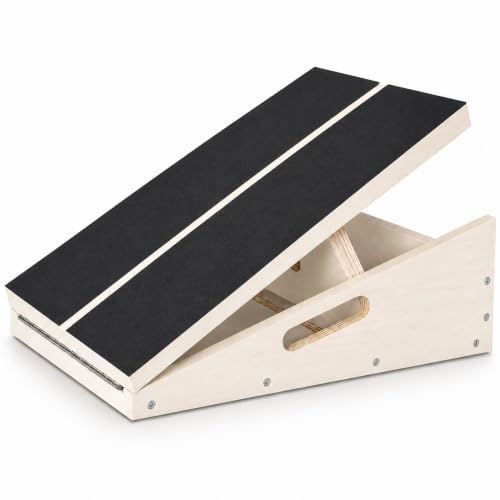
- Five angles from 15° to 35°
- 500-pound capacity with slip-resistant base
- Includes exercise guide and 3-year warranty
Best For: Guided calf stretching, mobility, and rehabilitation routines
Heavy-Duty Pick
HANDBODE Five-Angle Slant Board

- Steel frame supports up to 660 lb
- Five angles from 15° to 40°
- Folding, no-assembly design with traction surface
Best For: Home gyms and users seeking a sturdy, highly adjustable board
Portable Stretching Pick

- Lightweight 4.6-pound folding design
- Five angles from 23° to 45°
- Includes workout poster and instructions
Best For: Travel, office, gym, and general calf stretching
Versatile Two-in-One

- Combines balance and incline training
- Four adjustable incline positions
- Compact design for home, office, or therapy
Best For: Multifunctional stretching, balance work, and standing desks
Best Adjustable Pick
Frylr Folding Wooden Slant Board

- Four incline settings from 20° to 40°
- Folds with carry handle and magnetic closure
- 12-layer wood construction rated to 500 pounds
Best For: Portable calf stretching, mobility, and recovery
Best Angle Range
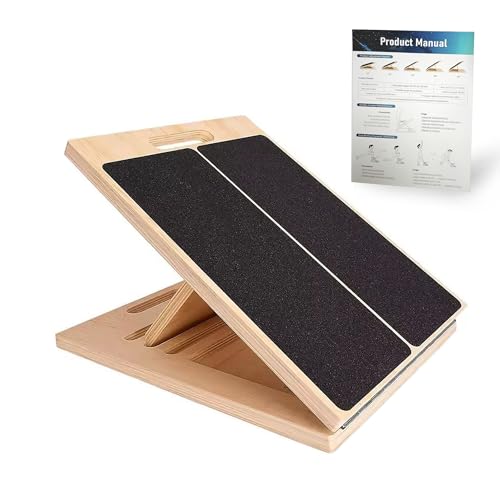
- Five settings from 20° to 45°
- 350-pound capacity with non-slip surface
- Folds flat and arrives fully assembled
Best For: Progressive stretching, squats, Pilates, and recovery
Best Lightweight Option

- Weighs approximately 4.5 pounds
- Four incline settings from 30° to 45°
- Designed for stretching, squats, Pilates, and therapy
Best For: Portable lower-leg mobility and rehabilitation work
Best Overall – StrongTek Adjustable Wooden Slant Board
The StrongTek Wooden Slant Board is a sturdy, adjustable option for anyone comparing wooden slant boards for calf stretching, mobility work, squats, or rehabilitation. Its five angle settings, high-grip surface, and hardwood plywood construction make it suitable for regular home or gym use.
Best For: Users who want a durable, versatile slant board with multiple angles and a high 500-pound capacity.
Pros:
- Five adjustable positions from 15° to 35°
- Supports up to 500 pounds
- Anti-slip tread and scratch-resistant construction
- Side handle and no assembly required
Cons:
- At 6.3 pounds, it is heavier than some portable alternatives
- The 12.5-inch width may feel limited for users wanting a wider stance
This is a well-rounded pick for stretching, physical therapy, and home-gym routines. The combination of adjustability, hardwood construction, and portability gives it broad everyday usefulness.
Best Portable Pick – TEMI Portable Wooden Slant Board
The TEMI Slant Board is a compact choice among wooden slant boards, combining a built-in handle with a lightweight design. Its adjustable wedge positions support calf stretching, heel stretches, squat training, ankle mobility, and balance exercises at home, in the gym, or at the office.
Best For: People who prioritize portability, compact storage, and multiple incline options.
Pros:
- Lightweight design at approximately 5 pounds
- Four incline settings: 20°, 25°, 30°, and 40°
- 500-pound weight capacity
- Soft non-slip surface and built-in carry handle
Cons:
- Offers four angles rather than five
- The compact platform may provide less standing room than larger boards
With its natural hardwood construction, portable format, and high weight capacity, the TEMI is practical for users who move their equipment frequently. It is especially convenient for mobility drills and stretching in different locations.
Best Wide-Footprint Design – StrongTek 13-Inch Wooden Slant Board
This StrongTek model stands out among wooden slant boards with a 13-inch-wide platform and foldable handheld design. Five settings from 15° to 35° let users progress gradually through calf stretching, ankle mobility, squats, lunges, and rehabilitation exercises.
Best For: Users who want extra standing width, foldable storage, and secure traction on hard floors.
Pros:
- Extra-wide 13-inch platform for a more natural stance
- Five adjustable angles from 15° to 35°
- High-grip top and rubber anti-slip bottom
- Foldable body with integrated carry handle
Cons:
- 350-pound maximum weight recommendation is lower than some listed alternatives
- Its yellow-and-black color scheme may not suit every space
The wider platform is useful for standard squats, lunges, and calf raises, while the folding design makes storage easier. It is a strong fit for users who value stance room and floor stability over the highest weight rating.
Best With Exercise Guide – Professional Wooden Slant Board
This professional wooden slant board is designed for controlled calf stretching, ankle mobility, squats, calf raises, warm-ups, and rehabilitation. Five angle settings, a textured top, slip-resistant base, and included exercise guide make it approachable for beginners while remaining useful for athletes.
Best For: Buyers who want a high-capacity wooden slant board with an exercise guide and extended warranty.
Pros:
- Five adjustable angles from 15° to 35°
- 500-pound capacity with textured top and slip-resistant base
- Side handles support easy carrying and storage
- Includes an exercise guide and 3-year manufacturer warranty
Cons:
- Weighs approximately 3.85 kg, so it is not the lightest option
- Its 12.5-inch width may be narrower than some users prefer
This board offers a strong balance of adjustability, stability, and guidance for varied fitness levels. The exercise guide and warranty add practical value for anyone building a consistent mobility or stretching routine.
Heavy-Duty Pick – HANDBODE Five-Angle Slant Board
If you want wooden slant boards with a particularly sturdy foundation, the HANDBODE combines a multilayer wood platform with a 1.5 mm alloy steel frame. Its five angle settings support calf stretching, ankle mobility, heel raises, and squat preparation.
Best For: Home gyms, daily mobility work, and users who prioritize a high stated load capacity.
Pros:
- Steel frame supports up to 660 lb.
- Five settings from 15 to 40 degrees.
- Sand-grain surface helps maintain foot traction.
- Folds for storage and requires no assembly.
Cons:
- At 12 x 15.7 inches, it may feel compact for some stances.
- The steel-and-wood construction may be less lightweight than simpler boards.
The HANDBODE is a strong choice when stability and adjustability matter more than minimalist construction. Its broad angle range and ready-to-use folding design make it practical for repeated lower-body mobility sessions.
Portable Stretching Pick – Five-Angle Wooden Calf Board
This portable option is one of the more travel-friendly wooden slant boards, weighing 4.6 pounds and folding for transport. Five settings from 23 to 45 degrees let beginners and experienced users choose a comfortable calf-stretching level.
Best For: Portable calf, ankle, heel, and leg stretching at home, in the office, or at the gym.
Pros:
- Five adjustable angles accommodate different stretching levels.
- Folds for easier carrying and storage.
- Supports stretching for calves, glutes, heels, ankles, and legs.
- Includes a workout poster and instructions.
Cons:
- The supplied details list a 300-pound maximum weight recommendation.
- No warranty is provided.
- The platform is smaller than some larger training boards.
Choose this model if portability and a wide angle range are your priorities. It offers useful stretching versatility without setup, though buyers should observe the stated weight recommendation.
Versatile Two-in-One – Balance and Slant Board
Among wooden slant boards, this model stands out by combining incline stretching with balance training. Four adjustable positions support calf stretching, core work, rehabilitation exercises, and use beneath a standing desk.
Best For: Users who want one compact board for balance work, stretching, physical therapy routines, or standing-desk use.
Pros:
- Functions as both a balance board and slant board.
- Four adjustable incline positions offer workout flexibility.
- Non-slip surface, antiskid feet, and floor-protection pads support safer use.
- Compact 15.6 x 11.7-inch design weighs 4 pounds.
Cons:
- The supplied details list a 200-pound support claim in the product description and a 350-pound maximum recommendation in specifications.
- Four incline positions provide fewer settings than some five-angle boards.
- Balance-board use may require more control than a standard slant board.
This is the most multifunctional choice of the three, especially for buyers who want balance training or an under-desk option. Its compact wooden construction and safety features add everyday versatility, but weight specifications should be reviewed carefully.
Best Adjustable Pick – Frylr Folding Wooden Slant Board
Among wooden slant boards, the Frylr stands out for its folding design, carry handle, magnetic closure, and four-position incline. It is a practical option when you want an adjustable calf stretcher that can move between home, the office, and the gym.
Best For: Portable mobility work, calf stretching, warm-ups, recovery, and users who want multiple incline settings.
Pros:
- Adjusts to 20°, 25°, 30°, and 40° for varied stretching intensity.
- Folds compactly and includes an integrated carry handle and magnetic closure.
- Uses a non-slip foot surface and bottom grip pads for a more stable setup.
- 12-layer wood construction is rated for up to 500 pounds.
Cons:
- Its roughly 5-pound weight may be more than some users want for frequent carrying.
- The design is primarily suited to standing stretches and lower-body mobility work.
The Frylr is a well-rounded choice if adjustability and portability matter most. Its foldable construction makes storage easy, while the broad angle range supports both gentle mobility sessions and more demanding stretching.
Best Angle Range – Five-Angle Wooden Slant Board
This wooden slant board offers five angle choices, including a demanding 45° setting, making it useful for gradually increasing calf and ankle stretching intensity. Its fold-flat design also suits home gyms, offices, and compact storage spaces.
Best For: Users who want five challenge levels for stretching, squats, Pilates, yoga, physical therapy, or daily recovery.
Pros:
- Provides five incline levels: 20°, 30°, 35°, 40°, and 45°.
- Supports up to 350 pounds and has a heavy-duty non-slip surface.
- Folds flat for storage under a bed, beside a desk, or in a closet.
- Arrives fully assembled and includes an instruction guide.
Cons:
- Its 45° maximum angle may be more challenging for beginners.
- At about 5 pounds, it is portable but not especially lightweight.
Choose this model if fine-tuning the incline is more important than having the highest weight capacity. The five settings give you room to progress, while the foldable frame keeps the board convenient to store.
Best Lightweight Option – Portable Wooden Slant Board
For shoppers comparing wooden slant boards for basic portability, this model keeps the setup straightforward with four adjustable positions and a 4.5-pound build. It is designed for stretching, squats, Pilates, and physical therapy at home, in the office, gym, or clinic.
Best For: Beginners and experienced users seeking a portable board for calf stretching, mobility exercises, and rehabilitation routines.
Pros:
- Lightweight at approximately 4.5 pounds for easier transport.
- Offers four incline positions: 30°, 35°, 40°, and 45°.
- Supports a range of uses, including squats, Pilates, stretching, and rehabilitation.
- Suitable for home, office, gym, and physiotherapy settings.
Cons:
- It does not include the lower 20° angle offered by some adjustable boards.
- The supplied notes do not specify a weight-capacity rating.
This is a sensible pick when portability and a simple four-position design are the priorities. Its higher starting angle may appeal to users already comfortable with calf and lower-leg stretching, while its compact footprint supports easy use in different locations.
How We Picked the Best Wooden Slant Boards
We focused on the features that matter during repeated stretching and mobility sessions: usable angle ranges, platform dimensions, weight capacity, surface traction, frame construction, and ease of adjustment. We also considered whether each board is practical to store and carry, since many buyers use slant boards in more than one room or take them to the gym.
Adjustability received particular attention. A board with several angle positions can support gradual progression, while a fixed wedge may be simpler but less adaptable. We also looked for designs that can remain stable under load and accommodate common movements such as calf stretches, heel-elevated squats, ankle drills, and balance exercises.
Quick Comparison
For a straightforward calf-stretching setup, choose a five-angle board with a nonslip surface and a sturdy frame. Higher-capacity models are better suited to heavier users or more forceful exercise. Wider platforms can feel more secure, while folding or handle-equipped designs are convenient for storage and transport.
Some options add balance-board functionality, giving you more exercise variety but also requiring greater control. If portability is your priority, look for a foldable or lightweight model; if stability matters most, prioritize a broad base, reinforced frame, and generous weight rating.
Key Buying Factors for Wooden Slant Boards
Angle Range and Adjustment
Multiple incline settings let you begin with a mild stretch and progress gradually. Check how the angle is changed and whether the adjustment mechanism locks securely before use.
Size, Traction, and Stability
The platform should provide enough room for your feet in your preferred stance. A textured or nonslip surface is important, especially when stretching barefoot. Rubber feet, a solid base, and a rigid frame help prevent sliding or rocking.
Weight Capacity and Construction
Compare the stated capacity with your body weight and the demands of dynamic exercises. Wood can provide a solid, natural feel, while steel-reinforced models may offer additional support. Inspect hinges, angle supports, and edges for signs of weak construction.
Portability and Storage
Handles, folding designs, and compact dimensions make a board easier to move and store. These features are useful if you alternate between home, office, gym, or therapy spaces.
Who Should Buy Which Wooden Slant Boards?
For everyday stretching: Choose a portable five-angle board with reliable traction and a comfortable platform.
For heavier users: Favor a higher-capacity model with a reinforced frame and a wide, stable base.
For mobility progression: Select a board offering several clearly defined angles so you can increase intensity gradually.
For compact storage: Look for a foldable design or built-in carrying handle.
For broader workouts: A 2-in-1 slant and balance board can add variety, but it may require more balance and coordination than a dedicated calf stretcher.
Whichever model you choose, start at a comfortable angle, keep the board on a stable surface, and stop if you experience sharp pain rather than normal stretching tension.