A doorway threshold can be a small obstacle with a big impact on mobility. The right ramp creates a smoother transition for wheelchairs, scooters, walkers, and other mobility equipment without requiring a permanent structural change.
We’ve selected 10 adjustable threshold ramps and low-rise rubber options for different doorway heights, available space, load requirements, and installation needs. Use the guide below to narrow your choices before buying.
Best 10 Adjustable Threshold Ramps Picks for 2026
Best Portable Heavy-Duty Pick
VEVOR Adjustable Aluminum Threshold Ramp

- 400-pound aluminum load capacity
- Adjustable 2.75- to 6.63-inch support legs
- Lightweight, visible, and tool-free
Best For: Portable home access for wheelchairs, walkers, strollers, and carts
Best High-Capacity Aluminum Pick
24 x 36-Inch Adjustable Threshold Ramp

- 800-pound stated load capacity
- Adjusts from 1.6 to 4.7 inches
- 36-inch width with included door mat
Best For: Wide residential or commercial entryways
Best Heavy-Duty Rubber Option
VEVOR 4-Inch Rubber Threshold Ramp
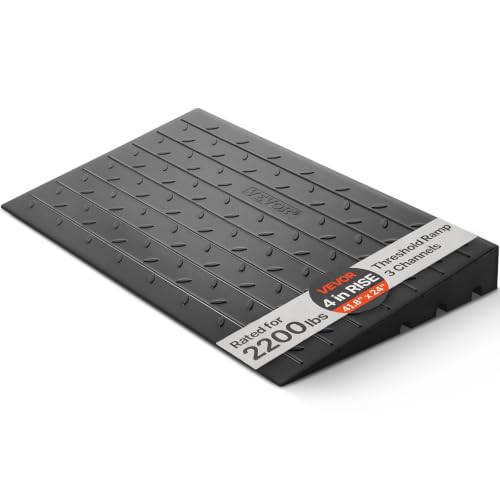
- 2,200-pound rubber load capacity
- Three integrated cable channels
- Stable, slip-resistant 4-inch rise
Best For: Heavy-duty driveways, garages, and cable-crossing areas
Best Wide-Range Adjustable Pick
UOKRR 36-Inch Aluminum Threshold Ramp

- 3.2- to 7.1-inch adjustable height range
- 800-pound aluminum load capacity
- 36-inch width with hinged transition plate
Best For: Wide doorways and higher thresholds
Heavy-Duty Rubber Access

- Solid rubber construction with beveled edges
- Grooved surface for added traction
- Supports wheelchairs, scooters, and vehicles
Best For: High-load 3-inch doorway and curb transitions
Wide-Range Adjustable Access

- Adjusts across a 2.6- to 7.3-inch rise
- Swivel feet and booster screws aid leveling
- Aluminum construction supports up to 1,100 pounds
Best For: Variable-height doorways and single-step access
Visible Low-Profile Access
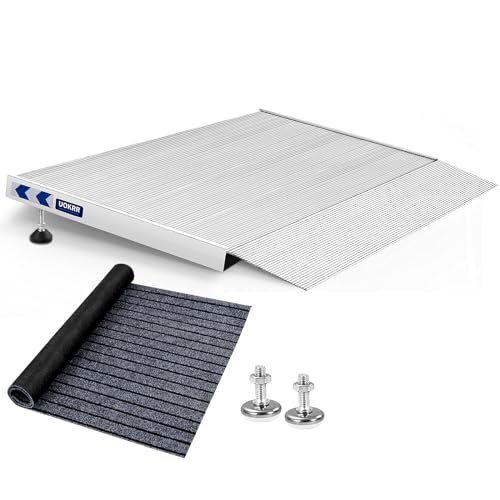
- Adjusts for rises from 1.57 to 4.72 inches
- Built-in anti-slip teeth and reflective strips
- Hinged plate helps smooth the entry transition
Best For: Lower thresholds requiring portable, visible access
Best Integrated Aluminum Pick

- 6061 aluminum supports up to 800 pounds
- Fits 3- to 5.5-inch thresholds
- Anti-slip teeth and reflective strips
Best For: Wide doorways and taller thresholds
Best Heavy-Duty Pick
VEVOR Adjustable Threshold Ramp

- Supports up to 1,000 pounds
- Wide 42.5-by-23.2-inch platform
- Adjusts from 3 to 6 inches
Best For: Heavy equipment and frequently used entrances
Best Lightweight Aluminum Pick
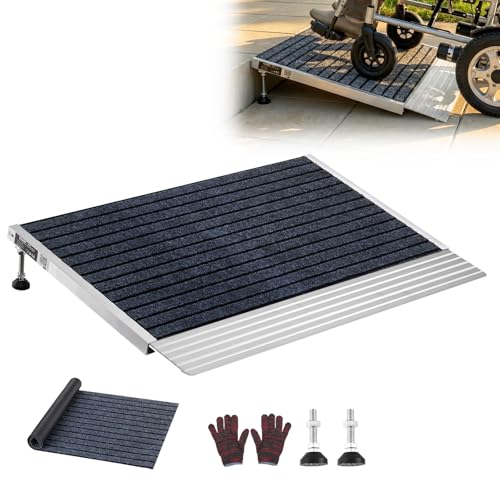
- Weighs only 18 pounds
- Adjusts from 2.75 to 4.5 inches
- 800-pound aluminum construction
Best For: Portable access across low residential thresholds
Best Portable Heavy-Duty Pick – VEVOR Adjustable Aluminum Threshold Ramp
This adjustable threshold ramp is a practical choice for household doorways, patios, garages, and sheds. Its adjustable support legs fit height gaps below 4 inches, while the lightweight aluminum build and bright yellow finish make it easy to move and highly visible.
Best For: Homeowners who need a portable ramp for wheelchairs, walkers, strollers, carts, or other rolling equipment.
Pros:
- Supports up to 400 pounds with a reinforced aluminum alloy frame.
- Adjustable legs accommodate heights from 2.75 to 6.63 inches.
- Sandblasted surface provides traction for both feet and wheels.
- Weighs only 13 pounds and requires no tools for setup.
Cons:
- The stated fit is primarily for household height gaps below 4 inches.
- Its 31.9-inch width may not cover wider entrances.
Choose this model when portability, visibility, and quick setup matter most. The 400-pound capacity suits many everyday household loads, though heavier commercial-duty needs may call for a higher-capacity option.
Best High-Capacity Aluminum Pick – 24 x 36-Inch Adjustable Threshold Ramp
For shoppers comparing adjustable threshold ramps by capacity, this 24-by-36-inch aluminum model stands out with an 800-pound rating. Its adjustable footings accommodate thresholds from 1.6 to 4.7 inches, and the included thick door mat adds cushioning and stability.
Best For: Residential or commercial doorways needing a wide, high-capacity aluminum transition for mobility equipment and carts.
Pros:
- Supports up to 800 pounds while weighing 10.4 pounds according to the product description.
- Fits thresholds from 1.6 to 4.7 inches with two adjustable footings.
- Non-slip surface and included thick door mat help improve stability.
- Requires no tools or assembly and can be used indoors or outdoors.
Cons:
- The adjustment range does not cover thresholds above 4.7 inches.
- The listed item weight differs between the feature description and product details.
This is a strong fit when you want an aluminum ramp with a high stated load limit and a 36-inch width. Verify the threshold height and the product’s listed weight before ordering.
Best Heavy-Duty Rubber Option – VEVOR 4-Inch Rubber Threshold Ramp
This rubber threshold ramp is designed for a fixed 4-inch rise rather than adjustable height. Its substantial 65-pound construction stays in place, supports up to 2,200 pounds, and includes three channels for routing cables, wires, or hoses across a doorway or driveway.
Best For: Heavy-duty indoor or outdoor crossings where stability, cable management, and a high load rating are priorities.
Pros:
- Supports up to 2,200 pounds and resists shifting during use.
- Raised-button rubber surface provides slip resistance and shock absorption.
- Three channels help protect and organize cables, wires, and hoses.
- One-piece design requires no assembly or tools.
Cons:
- It is not height-adjustable and is intended for a 4-inch rise.
- At 65 pounds, it is considerably less portable than aluminum alternatives.
- The approximately 14-degree incline is not recommended for severely mobility-impaired users without appropriate assistance.
This ramp makes sense for garages, driveways, barns, and other demanding locations where a heavy rubber base is helpful. Its fixed height and steep incline should be checked carefully against the user and doorway before purchase.
Best Wide-Range Adjustable Pick – UOKRR 36-Inch Aluminum Threshold Ramp
Among adjustable threshold ramps, this 36-inch-wide aluminum model offers one of the broadest stated height ranges in the roundup. Its interchangeable foot configurations cover 3.2 to 7.1 inches, while a hinged transition plate helps create a smoother connection with the floor.
Best For: Wider entryways and higher thresholds used by wheelchairs, scooters, walkers, bikes, carts, or trolleys.
Pros:
- Adjusts from 3.2 to 7.1 inches using multiple foot configurations and extensions.
- Supports up to 800 pounds with a thick 6061 aluminum integrated-mold structure.
- Built-in anti-slip teeth, a mat, and reflective strips add visibility and traction.
- Hinged transition plate helps bridge small floor gaps for smoother roll-ons.
Cons:
- At 21.6 pounds, it is heavier than the smaller portable aluminum options.
- The wide 36-inch design may be more ramp than narrow doorways require.
This is the most versatile choice for higher or variable thresholds, especially when width and smooth floor contact are important. Confirm the available space and select the appropriate foot configuration for the threshold height.
Heavy-Duty Rubber Access – 3" Rubber Threshold Ramp
For a sturdy, low-maintenance option among adjustable threshold ramps, this VEVOR model uses a solid rubber design with beveled edges for smoother transitions. Its 3-inch rise suits doorways, garages, gardens, and other raised surfaces, though the height itself is not adjustable.
Best For: Wheelchairs, scooters, walkers, carts, and household vehicles needing a durable 3-inch threshold transition.
Pros:
- Supports up to 2,200 pounds according to the product notes.
- Grooved rubber surface helps provide traction, while beveled edges support smoother approaches.
- One-piece design requires no tools and can be used indoors or outdoors.
- Wide 35.5-inch design accommodates wheelchairs up to 26.8 inches wide.
Cons:
- Height is fixed at 3 inches rather than adjustable.
- At about 29 pounds, it is heavier than the aluminum alternatives.
- The recycled rubber may have a slight rubber smell.
This is a practical choice when you need maximum stability and a high load rating more than fine height adjustment. Its solid construction is particularly useful for permanent or semi-permanent access points.
Wide-Range Adjustable Access – 2.6-7.3" Adjustable Ramp
This aluminum option stands out among adjustable threshold ramps for its broad 2.6- to 7.3-inch height range. Independently adjustable legs, swivel feet, and booster screws help it accommodate taller or uneven thresholds without professional tools.
Best For: Doorways, single-step rises, and uneven indoor or outdoor surfaces used by wheelchairs, scooters, walkers, bikes, carts, or buggies.
Pros:
- Height adjusts from 2.6 to 7.3 inches for a wider range of entry conditions.
- Lightweight aluminum alloy construction resists rust and corrosion.
- Anti-slip frosted strips improve grip and dry faster than cloth pads.
- Rubber strips beneath the ramp help improve contact with the ground.
Cons:
- Its 1,100-pound capacity is lower than the rubber model’s stated capacity.
- Adjustable components may require more setup than a one-piece fixed ramp.
- The supplied dimensions list a 36-inch length and 30-inch width, which may require careful doorway measurement.
Choose this model when threshold heights vary or when you need substantial adjustment for a taller rise. It offers a useful balance of portability, weather-resistant aluminum, and setup flexibility.
Visible Low-Profile Access – 1.6-4.7" Aluminum Ramp
This UOKRR ramp is a compact choice among adjustable threshold ramps, covering rises from 1.57 to 4.72 inches with interchangeable adjustable feet. Its built-in anti-slip teeth, reflective strips, and hinged transition plate add practical details for smoother and more visible entry.
Best For: Doorways up to 36 inches wide, especially indoor or outdoor access points used by wheelchairs, walkers, scooters, carts, and small casters.
Pros:
- Adjustable feet cover thresholds from approximately 1.57 to 4.72 inches.
- Integrated 6061 aluminum construction supports up to 800 pounds and resists rust.
- Built-in anti-slip teeth and reflective strips improve traction and visibility.
- Hinged front plate helps bridge small gaps for smoother roll-ons.
Cons:
- Its 800-pound capacity is lower than the other listed options.
- The adjustment range does not cover rises above 4.72 inches.
- Users must select and attach the appropriate adjustable feet for the threshold height.
This model is well suited to lower thresholds where visibility and a smooth floor transition matter. Its 15-pound weight also makes it easier to transport and store than the heavier rubber ramp.
Best Integrated Aluminum Pick – Adjustable Threshold Ramp
This adjustable threshold ramp is a sturdy choice for doorways measuring 36 inches wide. Its 6061 aluminum integrated construction supports up to 800 pounds, while adjustable feet accommodate thresholds from 3 to 5.5 inches. Built-in anti-slip teeth, reflective strips, and a hinged transition plate add practical safety for everyday access.
Best For: Wheelchairs, scooters, walkers, carts, and other mobility equipment at taller residential or commercial thresholds.
Pros:
- Adjusts from 3 to 5.5 inches with swiveling leveling feet.
- Strong 6061 aluminum construction supports up to 800 pounds.
- Built-in anti-slip teeth, reflective strips, and a hinged transition plate improve entry safety.
- Relatively portable at about 18.5 pounds and includes a non-slip mat.
Cons:
- Designed for 36-inch-wide doorways, so it may not suit narrower openings.
- Its 3- to 5.5-inch adjustment range is intended for higher thresholds rather than very low lips.
Choose this model if you want a wide, corrosion-resistant aluminum ramp with a generous adjustment range and extra visibility features. The integrated design and transition plate make it especially practical where smooth rolling access matters.
Best Heavy-Duty Pick – VEVOR Adjustable Threshold Ramp
Among adjustable threshold ramps, this VEVOR platform stands out for its 1,000-pound capacity and broad 42.5-by-23.2-inch surface. The carbon steel body is designed for stable indoor or outdoor use, while the 3- to 6-inch adjustment range covers many common steps and doorway gaps.
Best For: Heavy wheelchairs, scooters, walkers, carts, tools, and household equipment crossing 3- to 6-inch entry heights.
Pros:
- Highest stated load capacity in this roundup at 1,000 pounds.
- Wide platform provides a substantial rolling surface.
- Textured anti-slip carbon steel construction is designed for rust and weather resistance.
- Tool-free height adjustment and a solid one-piece design simplify setup.
Cons:
- At 37.7 pounds, it is substantially heavier than the aluminum options.
- Its larger platform may be less convenient to carry or store in tight spaces.
This is the most suitable option when load capacity and platform stability take priority over portability. Its broad surface and 3- to 6-inch range make it a strong fit for substantial equipment and frequently used entrances.
Best Lightweight Aluminum Pick – VEVOR Threshold Ramp
This VEVOR adjustable threshold ramp combines an aluminum alloy frame with an 18-pound weight for easier repositioning and storage. Its support legs adjust from 2.75 to 4.5 inches, and the sandblasted surface provides traction for wheelchairs, walkers, carts, and foot traffic across low entry gaps.
Best For: Residential doorways, patios, garages, and sheds where a portable ramp is needed for low-rise thresholds.
Pros:
- Lightweight 18-pound aluminum construction is easy to move and store.
- Adjustable legs provide a 2.75- to 4.5-inch height range without tools.
- Sandblasted surface helps improve traction for wheels and feet.
- Supports up to 800 pounds and resists moisture and corrosion.
Cons:
- For wheelchair use, the supplied notes recommend a maximum height of 3 inches.
- Its adjustment range is narrower than models reaching 5.5 or 6 inches.
This model is a practical pick when portability matters and the threshold is relatively low. It offers a useful balance of aluminum durability, traction, and tool-free adjustment for everyday home access.
How We Picked These Adjustable Threshold Ramps
We focused on ramps that address common doorway-access problems: uneven thresholds, raised door tracks, limited approach space, and changes in floor height. The selection includes adjustable aluminum platform ramps as well as fixed rubber ramps, so shoppers can compare portability, height range, traction, and load capacity in one place.
We also considered the dimensions, stated rise range, surface design, weight ratings, and practical features such as non-slip finishes, cable channels, and height-adjustment hardware. Before purchasing, verify the manufacturer’s specifications and measure your doorway rather than relying on a product title alone.
Quick Comparison
| Ramp type | Best for | Main advantage | Potential limitation |
|---|---|---|---|
| Adjustable aluminum platform | Variable thresholds and mobility devices | Height flexibility and a firm rolling surface | Usually requires setup and may be heavier |
| Fixed rubber threshold ramp | Consistent low-to-medium rises | Stable, durable, and often easy to place | Less adaptable if the threshold height changes |
| Wide platform ramp | Wheelchairs, scooters, or wider equipment | More usable clearance and approach room | Needs more floor space |
Key Buying Factors for Adjustable Threshold Ramps
Measure the Actual Rise
Measure from the lower floor surface to the highest point of the threshold, including trim or a door track. Choose a ramp whose adjustment range includes that measurement. A ramp that is too tall or too short can create an unsafe lip at either end.
Check Length, Width, and Approach Space
Confirm the ramp will fit between walls, railings, and the door frame. Longer ramps generally provide a gentler incline, while wider models offer better clearance for scooters, power chairs, and users who need extra steering room. Also check whether the door can open fully once the ramp is in position.
Match Capacity to the Complete Load
Weight capacity should cover the user, wheelchair or scooter, and any bags or equipment. Treat the listed rating as a maximum, not a target. For powered mobility devices, consider wheel placement and whether the ramp surface remains stable under concentrated loads.
Prioritize Traction and Stability
Look for a textured or non-slip surface, especially near exterior doors or areas exposed to moisture. Rubber models may provide strong grip and a low center of gravity, while aluminum platforms may need careful leveling and secure placement. Check for movement after installation and follow the manufacturer’s instructions.
Consider Portability and Installation
If the ramp will move between locations, check its weight, folding or modular design, and adjustment process. For a semi-permanent setup, confirm whether hardware, edge protection, or anchoring is recommended. Cable channels can be useful when cords must cross the threshold, but they should not interfere with wheels or walking paths.
Who Should Buy Which Adjustable Threshold Ramps?
Choose an adjustable aluminum model if your threshold height varies, you expect to move the ramp, or you need a precise fit for a wheelchair or scooter. A wider, longer platform is generally the better choice when maneuvering space is limited or the mobility device has a broad wheelbase.
Choose a fixed rubber threshold ramp when the rise is consistent and you want a straightforward, durable transition with minimal setup. Rubber designs with cable channels are especially useful for doorways where cords regularly cross the threshold. For any option, confirm measurements, capacity, traction, and door clearance before ordering.