The best fitness trackers make it easier to understand your activity, sleep, workouts, and recovery without turning health data into guesswork. The right choice depends on whether you want a simple band, a full smartwatch, or a screen-free wearable with deeper wellness insights.
We selected 10 fitness trackers across major brands and budget categories, including models with built-in GPS, heart-rate and blood-oxygen monitoring, sleep tracking, smart notifications, and long battery life. Use the guide below to compare the most important differences before you buy.
Best 10 Fitness Trackers Picks for 2026
Best Overall

- Built-in GPS and 40+ exercise modes
- Sleep, stress, heart-rate, and readiness tracking
- Google Maps, Wallet, and music controls
Best For: Everyday fitness and outdoor workouts
Best Smartwatch Upgrade

- Workout and sleep tracking with real-time metrics
- Fall and crash detection for added safety
- Calls, texts, Siri, music, and notifications
Best For: iPhone users wanting fitness and smartwatch features
Best Battery Life

- Up to 10 days of battery life
- Tracks activity, sleep, stress, and heart rate
- 40+ exercise modes with smartphone GPS
Best For: Simple, lightweight everyday wellness tracking
Best for Recovery Insights

- Screenless sleep, stress, and recovery tracking
- AI coaching based on 140+ health metrics
- 14+ days of battery with wearable charging
Best For: Training-focused users prioritizing recovery and sleep
Screen-Free Simplicity

- Screenless, discreet design for uninterrupted wear
- Up to one week of battery life
- Micro-adjustable fit for work, workouts, and sleep
Best For: Screen-free health and activity tracking
Training and Recovery Focus

- Built-in GPS and 30-plus sports apps
- Up to 11 days of smartwatch-mode battery
- Body Battery, sleep, nap, and recovery insights
Best For: Structured training and multisport tracking
Smartwatch Convenience
Alexa Fitness Tracker Smartwatch

- Alexa voice assistance built in
- Bluetooth calling with app notifications
- 100-plus sports modes and running pace feedback
Best For: Everyday smartwatch features plus activity tracking
Best Overall Value

- Heart-rate, blood-oxygen, and sleep monitoring
- 1.1-inch AMOLED screen with customizable watch faces
- Up to 7 days of regular use with IP68 water resistance
Best For: Feature-rich everyday health and activity tracking
Best for Workout Variety

- Supports 25 selectable sports modes
- Tracks sleep, heart rate, blood oxygen, and activity
- AMOLED display and up to 7 days of regular use
Best For: Users who want broad workout-mode coverage
Best Slim Band
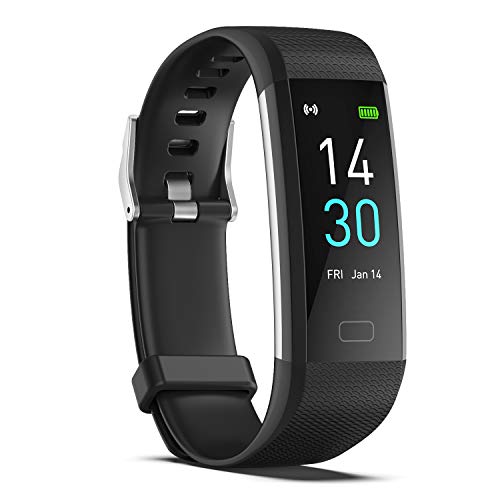
- Slim, lightweight design with IP68 water resistance
- Tracks activity, sleep, heart rate, and other health metrics
- 16 sports modes and up to 5–7 days of battery life
Best For: Simple everyday tracking in a lightweight band
Best Overall – Fitbit Charge 6
The Fitbit Charge 6 is a well-rounded choice among fitness trackers, combining built-in GPS, broad workout support, sleep insights, and Google features in a compact design. Its seven-day battery life also suits users who prefer less frequent charging.
Best For: Everyday fitness tracking, outdoor workouts, and users who want Google Maps and Google Wallet on their tracker.
Pros:
- Tracks heart rate, sleep, stress, calories, Active Zone Minutes, and Daily Readiness.
- Includes built-in GPS, 40+ exercise modes, automatic exercise tracking, and 50-meter water resistance.
- Offers turn-by-turn Google Maps directions, Google Wallet payments, and YouTube Music controls.
- Provides up to seven days of battery life.
Cons:
- Some personalized coaching features require a separately sold Google Health Premium membership.
- Compatibility requires Android 11.0 or newer or iOS 16.4 or newer.
Choose the Charge 6 if you want a feature-rich fitness tracker that balances health metrics, workout tools, navigation, and battery life without focusing solely on smartwatch functions.
Best Smartwatch Upgrade – Apple Watch SE 3
The Apple Watch SE 3 is a smartwatch-led option for shoppers who want fitness trackers to handle workouts alongside communication and safety features. It provides real-time workout metrics, health insights, and iPhone-connected everyday functions.
Best For: iPhone users who want fitness tracking plus calls, texts, notifications, Siri, and safety assistance.
Pros:
- Tracks running, strength training, daily steps, sleep score, and other health insights.
- Can detect hard falls or severe car crashes and help connect with emergency services.
- Supports calls, texts, music, podcasts, Siri, and notifications when connected to an iPhone or Wi-Fi.
- Offers 18-hour battery life and up to eight hours of battery after a 15-minute charge.
Cons:
- Battery life is shorter than the multi-day battery claims of the Fitbit models in this roundup.
- Its listed connectivity is centered on iPhone and Wi-Fi use.
The SE 3 makes sense when fitness tracking is only part of what you need. It is less focused on extended tracking between charges, but stronger for connected smartwatch and safety features.
Best Battery Life – Fitbit Inspire 3
The Fitbit Inspire 3 is a slim, straightforward pick among fitness trackers for monitoring daily movement, sleep, stress, and heart rate. Its 10-day battery life and included small and large bands make it practical for consistent wear.
Best For: Beginners, students, and anyone seeking lightweight everyday health and activity tracking.
Pros:
- Provides up to 10 days of battery life.
- Tracks activity, heart rate, sleep, stress, blood oxygen, resting heart rate, and menstrual health.
- Includes 40+ exercise modes, automatic exercise tracking, Daily Readiness, and reminders to move.
- Includes small and large bands and is water resistant to 50 meters.
Cons:
- GPS is provided through a smartphone rather than built into the tracker.
- Its 0.76-inch display is smaller than the screen on a smartwatch.
The Inspire 3 is a sensible value-oriented choice when comfort, battery longevity, and core wellness tracking matter more than onboard GPS or advanced smartwatch functions.
Best for Recovery Insights – WHOOP 5.0
WHOOP 5.0 takes a different approach to fitness trackers: it is screenless and built around continuous health, sleep, stress, and recovery insights in the WHOOP app. The listed package includes the device, a SuperKnit band, a waterproof wireless PowerPack, and a 12-month WHOOP Peak membership.
Best For: Training-focused users who want detailed recovery, sleep, behavior, and long-term health coaching.
Pros:
- Analyzes 140+ health and fitness metrics with AI coaching and personalized recommendations.
- Tracks sleep stages, sleep need, sleep debt, consistency, and efficiency.
- Monitors heart rate, HRV, respiratory rate, blood oxygen, skin temperature, and stress continuously.
- Offers 14+ days of battery life and charging through the wearable PowerPack.
Cons:
- The included device is tied to a 12-month WHOOP Peak membership.
- Its screenless design may not suit shoppers who want on-device workout or notification information.
- Many insights are delivered through the WHOOP app rather than directly on the wearable.
WHOOP 5.0 is best understood as a coaching and recovery platform rather than a conventional display-based fitness tracker. It is compelling for users who will actively use its app-based analysis and membership features.
Screen-Free Simplicity – Google Fitbit Air
For shoppers who want fitness trackers without another distracting screen, Google Fitbit Air focuses on comfortable, 24/7 activity and health tracking. Its lightweight, micro-adjustable design is made for wearing through work, workouts, and sleep.
Best For: People who prefer discreet, screen-free tracking and long battery life.
Pros:
- Screen-free design avoids notifications and visual distractions.
- Lightweight, adjustable fit supports all-day and overnight wear.
- Battery lasts up to a week, with five minutes of charging providing up to one day of use.
- Includes a three-month Google Health Premium trial for personalized coaching features.
Cons:
- No built-in screen for viewing stats or notifications on the tracker.
- Some coaching features require a separately sold premium subscription after the trial.
Google Fitbit Air is a focused option for users who value unobtrusive wearability over smartwatch features. It is especially appealing if you want health tracking that can blend into a bracelet, workout band, or sleep band.
Training and Recovery Focus – Garmin vívoactive 5
Garmin vívoactive 5 is one of the more feature-rich fitness trackers for shoppers who want GPS sports tracking, recovery insights, and a bright AMOLED display. It combines extensive health monitoring with up to 11 days of smartwatch-mode battery life.
Best For: Active users who want built-in GPS, structured workouts, and detailed recovery features.
Pros:
- Built-in GPS and more than 30 indoor and outdoor sports apps.
- Body Battery, sleep coaching, nap detection, stress tracking, and recovery-time insights support training decisions.
- Bright 390-by-390 AMOLED touchscreen with downloadable music for phone-free listening.
- Includes wheelchair mode with push tracking, handcycle activities, and relevant workouts.
Cons:
- The extensive feature set may be more than casual users need.
- Health metrics are estimates rather than medical measurements.
With its sports profiles, adaptive Garmin Coach plans, music support, and recovery tools, the vívoactive 5 suits users building a consistent training routine. It also offers broader accessibility features than many general-purpose fitness trackers.
Smartwatch Convenience – Alexa Fitness Tracker Smartwatch
This Alexa-enabled smartwatch combines fitness trackers features with everyday smartwatch functions. Its 1.91-inch HD display, Bluetooth calling, notifications, and more than 100 sports modes make it a practical choice for shoppers who want broad functionality at the wrist.
Best For: Users who want voice assistance, calling, notifications, and activity tracking in one device.
Pros:
- Built-in Alexa can handle reminders, timers, weather, music, workouts, and compatible smart-home controls.
- Large HD touchscreen and rotating crown provide flexible navigation and personalization.
- Supports Bluetooth calls and notifications from several messaging and social apps.
- Offers more than 100 sports modes, running pace feedback, sleep analysis, and wellness reminders.
Cons:
- Many smart functions depend on a connected phone and compatible services.
- The supplied notes do not specify battery life or built-in GPS.
This model is best viewed as a general-purpose smartwatch with fitness tracking rather than a dedicated training watch. It stands out for hands-free Alexa access, wrist-based calls, and a wide selection of activity modes.
Best Overall Value – AMOLED Fitness Tracker
For shoppers comparing fitness trackers, this C60 model combines everyday activity tracking with heart-rate, blood-oxygen, and sleep monitoring in a compact AMOLED touchscreen design. It also adds practical reminders, phone notifications, IP68 water resistance, and up to seven days of regular use.
Best For: People who want a feature-rich fitness tracker with a bright display, health monitoring, and long battery life.
Pros:
- Tracks heart rate, blood oxygen, sleep stages, steps, distance, and calories.
- Bright 1.1-inch AMOLED touchscreen with more than 70 watch faces and photo customization.
- Includes call and message notifications, drink and sedentary reminders, and menstrual-cycle recording.
- IP68 waterproof design and up to seven days of regular use.
Cons:
- Requires the Keep Health app and a compatible Android or iOS smartphone for setup and connected features.
- The listing provides no specific software-update support information.
This is a well-rounded option for everyday wellness tracking, especially if display quality and personalization matter. Its broad feature set makes it a practical choice for general activity and habit monitoring.
Best for Workout Variety – 25-Sport Fitness Tracker
Among fitness trackers, this C60 stands out for its selection of 25 sports modes and automatic health tracking. The 1.1-inch AMOLED screen, sleep score, phone alerts, and magnetic charging make it suited to shoppers who want workout data plus everyday smart reminders.
Best For: Active users who want many selectable exercise modes alongside sleep and wellness tracking.
Pros:
- Supports 25 sports modes, including walking, running, dancing, and yoga.
- Tracks heart rate, blood pressure, blood oxygen, steps, distance, calories, and sleep.
- Provides a nightly sleep score through the companion app.
- Offers call, text, and app notifications plus water and sedentary reminders.
Cons:
- Connected notifications and health reports require pairing with a compatible smartphone and app.
- The listing does not specify the watch’s water-resistance rating.
Choose this model if exercise selection is a priority. Its 25 modes offer more variety than the other listed options, while its AMOLED display and seven-day battery estimate support daily use.
Best Slim Band – IP68 Activity Fitness Tracker
This slim fitness tracker focuses on essential activity and wellness features in a lightweight band. It records steps, distance, calories, exercise data, sleep, and several health metrics, while IP68 protection and direct USB charging make it convenient for routine wear.
Best For: Men, women, and older users seeking a simple, lightweight tracker with waterproof protection and core monitoring features.
Pros:
- Slim, lightweight design fits wrists from 4.7 to 8.2 inches.
- Tracks steps, distance, calories, exercise time, heart rate, blood oxygen, blood pressure, and body temperature.
- Offers IP68 water resistance for hand washing and swimming, with up to 5–7 days of battery life.
- Includes 16 sports modes, connected GPS route recording, notifications, alarms, and reminders.
Cons:
- Blood-pressure measurement must be downloaded and enabled in the Runmefit app.
- It should not be worn for long soaking, hot baths, or saunas.
- Charging uses a built-in USB connector rather than a separate charging cable.
This is a sensible choice for shoppers who prefer a discreet band over a larger smartwatch. It covers the basics well, though users should follow the water-use limits and rely on the app for some features.
How We Picked the Best Fitness Trackers
We evaluated these Fitness Trackers by looking at the features that matter most in daily use: activity and workout tracking, heart-rate monitoring, sleep insights, GPS capability, battery expectations, comfort, app quality, and overall value. We also considered product type. A screenless wearable may suit someone focused on recovery and sleep, while a smartwatch is better for notifications, calls, apps, and on-wrist workout controls.
Because needs vary, this list includes established options from Fitbit, Apple, Garmin, and WHOOP alongside more affordable activity bands and smartwatches. Always confirm current compatibility, subscription requirements, and health-feature availability for your phone and region before ordering.
Quick Comparison
- Best all-around fitness band: Fitbit Charge 6 offers a balanced mix of activity, health, and connected features.
- Best smartwatch experience: Apple Watch SE 3 is a strong choice for iPhone users who want apps and notifications.
- Best for recovery-focused tracking: WHOOP 5.0/MG emphasizes sleep, strain, and recovery data through a membership model.
- Best GPS fitness smartwatch: Garmin vívoactive 5 suits runners, walkers, and multisport users who want detailed training tools.
- Best simple tracker: Fitbit Inspire 3 keeps the experience compact and straightforward.
Key Buying Factors for Fitness Trackers
Tracking and Sensor Features
Look for the measurements you will actually use. Step counts and heart rate are common, while sleep stages, blood oxygen, stress estimates, skin temperature, and recovery scores vary by model. These features can support wellness decisions, but they are not substitutes for medical equipment or professional advice.
GPS and Workout Support
Built-in GPS is useful for outdoor runs, rides, and walks without carrying a phone. Models that rely on connected GPS can still map activities, but your smartphone must stay nearby. Check for the sports modes and workout metrics that match your routine.
Battery, Comfort, and Durability
A smaller band may be more comfortable for overnight wear, while a smartwatch offers a larger display but often needs more frequent charging. Consider water resistance, band adjustability, screen readability, and whether the device can withstand your work and exercise environment.
Phone Compatibility and Subscriptions
Verify Android or iPhone compatibility before buying. Some advanced insights, coaching tools, or recovery features may require a paid membership. Include that ongoing cost when comparing long-term value.
Who Should Buy Which Fitness Trackers?
Choose a compact Fitbit-style band if you want convenient everyday activity and sleep tracking with minimal bulk. Pick a smartwatch if messages, calls, apps, music controls, and a larger on-device display are priorities. Runners and outdoor exercisers should favor a model with built-in GPS and strong workout analysis. Recovery-focused users may prefer a screenless wearable that prioritizes sleep and strain trends. Finally, budget shoppers can choose a basic tracker with heart-rate, step, calorie, or sleep features, provided they accept simpler apps and less polished data analysis.