Putting on socks can become difficult when bending, reaching, or gripping is limited. The right sock aid can make daily dressing more manageable by holding the sock open and bringing it within easier reach.
We compare 10 practical options for seniors, people recovering from surgery, pregnant users, and anyone managing limited mobility, with attention to fit, comfort, controls, and everyday usability.
Best 10 Sock Aids for Limited Mobility Picks for 2026
Gentle Grip Pick

- Terrycloth and nylon grip helps hold socks gently
- Designed for use without bending or twisting
- Suitable for regular socks, not compression socks
Best For: Users who need a lightweight aid for everyday socks
Compression-Friendly Choice

- Designed for compression socks and regular socks
- Ergonomic handles and anti-slip band improve control
- Lightweight, portable ABS construction
Best For: Users who need support with compression socks while seated
Wide-Fit Pick

- Wide opening fits feet up to about 4.2 inches wide
- Adjustable 38-inch cords reduce bending and reaching
- Best suited to regular socks, not compression socks
Best For: Users seeking a roomy, adjustable aid for everyday socks
Kit With Remover

- Includes a sock aid and assembled sock remover
- Four-inch tube and anti-slip foam support regular socks
- 33-inch rope helps reduce bending and can be shortened
Best For: Users who need help both putting on and removing socks
Most Versatile
Easy Sock Ox Adjustable Sock Aid
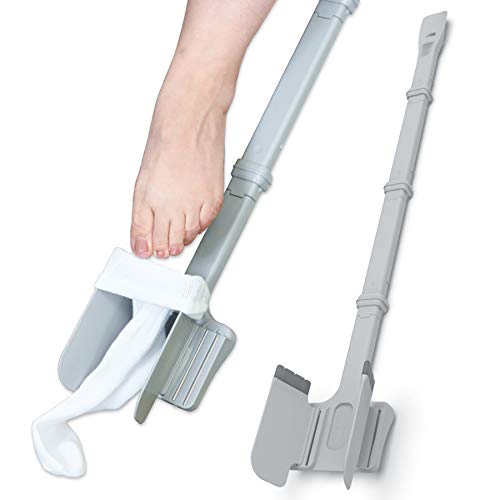
- Combines sock aid, shoe horn, and sock remover
- Adjustable width and three reach lengths
- Open cradle loads easily and packs flat
Best For: People who need help with socks, shoe entry, and sock removal
Best Multi-Dressing Set
Fanwer Sock Aid and Pants Assist

- Gentle terry-cloth sock-gripping surface
- Large loop handles ease pulling
- Includes adjustable 26–41-inch pants strap
Best For: Users needing assistance with both socks and lower-body clothing
Best Simple Option

- Flexible U-shaped shell stabilizes the sock
- Fits feet up to 4 inches wide
- Supports many regular sock styles
Best For: Users seeking a simple aid for putting on regular socks
Soft-Grip Comfort

- Soft terry cloth holds socks while nylon reduces friction.
- 27-inch straps with easy-grip loop handles.
- Flexible, lightweight design for home or travel.
Best For: Seniors and users seeking a comfortable, portable sock aid with long straps.
Everyday Ease
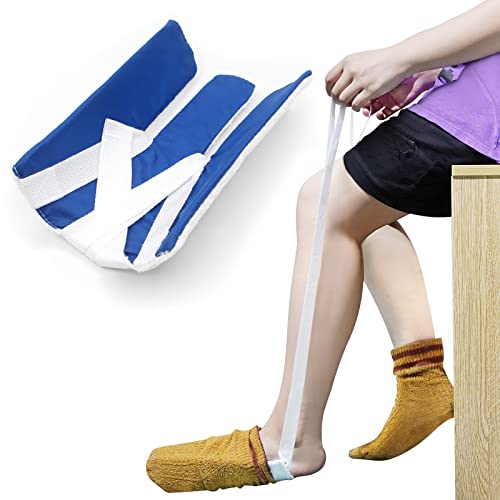
- Helps reduce bending, twisting, and reaching.
- Terry cloth grips socks; nylon reduces friction.
- Compatible with multiple sock styles and lengths.
Best For: Users needing a lightweight daily aid for various socks without bending.
Adjustable Reach
Corded Sock Aid with Grip Pads
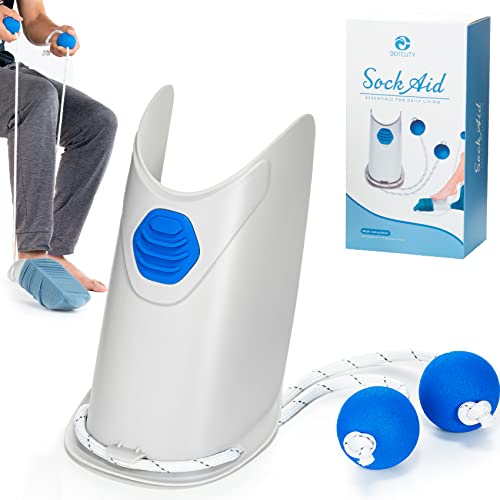
- Adjustable 30-inch cord supports customized reach.
- Silicone pads help prevent sock slippage.
- Durable frame works with many sock types.
Best For: Users with limited reach who want adjustable cords and added sock grip.
Gentle Grip Pick – CAidRE Three-Finger Sock Aid
For people comparing sock aids for limited mobility, the CAidRE model is designed to make everyday socks easier to pull on without bending, twisting, or turning. Its terrycloth-and-nylon covering aims to hold socks securely while reducing friction on the fabric.
Best For: Seniors, pregnant users, people with disabilities, and anyone who needs help putting on regular socks without bending.
Pros:
- Three-finger design helps hold stockings and socks in place.
- Terrycloth exterior and nylon interior provide a gentle but firm grip.
- Works with many regular dress, casual, and athletic socks.
- Lightweight design weighs about 2.4 ounces.
Cons:
- Not recommended for compression socks.
- Its design may be less suitable for users who need a wider sock aid.
This is a simple, lightweight choice for regular socks, particularly when minimizing bending and fabric friction is a priority. Shoppers needing compression-sock support should consider another model.
Compression-Friendly Choice – SOKELP Wide Sock Aid
Among sock aids for limited mobility, the SOKELP stands out for its wide design and compression-sock positioning. It is intended to let users stay seated while pulling on socks, with ergonomic handles and a full-width anti-slip band for added control.
Best For: Adults and children who need help with regular or compression socks, especially users managing osteoarthritis, sciatica, hip surgery recovery, or bending-related discomfort.
Pros:
- Designed for compression socks as well as other sock types.
- Ergonomic, breathable handles are intended to be comfortable to grip.
- Full-width foam and anti-slip features help keep socks from slipping.
- Rounded, polished edges and a matte finish support comfortable use.
Cons:
- At about 7.05 ounces, it is heavier than some simpler sock aids.
- The wide design may require some adjustment for users accustomed to narrower aids.
This model offers the broadest stated sock compatibility in the group, along with a portable ABS construction. It is a practical option when compression socks and seated dressing are central concerns.
Wide-Fit Pick – CAidRE 3.93-Inch Sock Aid
This wide CAidRE model is a useful option for shoppers seeking sock aids for limited mobility with a broad opening and adjustable reach. Its extended lip, non-slip foam pad, and long cord are designed to help users put on regular socks without bending or straining.
Best For: Seniors, pregnant users, and post-surgery or mobility-limited people whose feet measure about 4.2 inches wide or less and who wear regular socks.
Pros:
- Approximately 4.2-inch opening accommodates many foot sizes.
- Extended lip and non-slip foam pad help keep socks in place.
- 38-inch adjustable cords and soft foam handles support easier reaching.
- Smooth plastic shell is designed to slide socks on without tearing them.
Cons:
- Not recommended for tight compression socks or extremely thick stockings.
- Fits foot widths of about 4.2 inches or less.
- Users may need to adjust the cord length for comfortable handling.
With its wide opening and adjustable ropes, this is a strong regular-sock option for users who need more room and reach. Check the foot-width guidance before buying, particularly if you wear thick or compression hosiery.
Kit With Remover – Jellas 4-Inch Sock Aid
The Jellas kit combines a wide sock-putting-on tube with an assembled sock remover, making it a versatile choice among sock aids for limited mobility. The 33-inch rope is intended to reduce bending, while the frosted tube and anti-slip foam help guide and hold regular socks.
Best For: Older adults and people with back, knee, hip, leg, or foot limitations who want both sock application and removal assistance.
Pros:
- Includes an assembled sock remover in addition to the sock aid.
- Four-inch tube accommodates feet up to about 4 inches wide.
- 33-inch rope can be shortened by tying knots.
- Anti-slip foam helps hold socks during fitting.
Cons:
- Best for regular socks and not compression socks.
- The two-part remover can be difficult to disassemble if reinforced with nails.
- Arm injuries may affect the user experience.
This kit is appealing when sock removal matters as much as putting socks on. Its adjustable rope and wide tube suit many users with limited flexibility, but shoppers should consider the assembly and the stated limits for compression socks.
Most Versatile – Easy Sock Ox Adjustable Sock Aid
For shoppers comparing sock aids for limited mobility, the Easy Sock Ox stands out as a multi-purpose option for getting dressed without bending. Its open cradle loads flat, adjusts in width and length, and combines sock application, sock removal, and shoe-horn functions.
Best For: Seniors, wheelchair users, and people recovering from hip or knee surgery who want one adjustable tool for their full sock-and-shoe routine.
Pros:
- Combines a sock aid, long-handle shoe horn, and sock remover.
- Adjustable width and three reach lengths accommodate different feet and seated positions.
- Open cradle supports one-handed loading and avoids wrestling with a closed tube.
- Snaps together without tools and packs flat for travel.
Cons:
- Not designed for compression socks.
- Its multiple adjustable pieces may be more setup than needed for shoppers seeking a basic sock aid.
The Easy Sock Ox is a strong choice when independence includes taking socks off and putting on shoes, not just pulling socks on. Its adjustability and removable extensions add useful flexibility for everyday use.
Best Multi-Dressing Set – Fanwer Sock Aid and Pants Assist
The Fanwer is a practical pick among sock aids for limited mobility, especially for users who also struggle with pulling up pants. Its terry-cloth slider grips socks gently, while large loop handles provide leverage without requiring much bending.
Best For: Elderly, disabled, pregnant, or recovering users who want sock assistance plus a separate tool for underwear, pants, boxers, or skirts.
Pros:
- Terry-cloth covering provides a gentle but firm grip on socks.
- Large loop handles are designed for easier hand control.
- Includes an adjustable pants-assist strap measuring 26 to 41 inches.
- Does not restrict foot width.
Cons:
- Not suitable for pantyhose, stockings, crew socks, foot socks, or toe socks.
- The sock slider and string method may require practice for first-time users.
This set offers broader dressing support than a sock-only device. It is most useful when limited reach affects both lower-body clothing and socks, provided the user wears compatible sock styles.
Best Simple Option – KEKOY U-Shaped Sock Aid
The KEKOY is a straightforward choice for shoppers seeking sock aids for limited mobility without a complicated setup. Its flexible U-shaped shell helps hold the sock opening steady, allowing users to put on several regular sock styles while seated and avoiding a deep bend.
Best For: People with feet measuring up to 4 inches wide, including those recovering from surgery or managing arthritis, back limitations, pregnancy, or general difficulty bending.
Pros:
- Soft, flexible ABS shell makes sock insertion easier.
- U-shaped design helps stabilize the sock opening.
- Works with ankle, knee, calf, sports, dress, and other regular socks.
- Designed to support independent dressing without bending down.
Cons:
- Limited to foot widths of 4 inches or less.
- Not intended for compression socks or compression stockings.
The KEKOY keeps the design focused on the basic task of putting on regular socks. Confirming foot width and sock compatibility before purchase is important, but within those limits it offers a simple daily dressing aid.
Soft-Grip Comfort – NOVA Terry Cloth Sock Aid
For shoppers comparing sock aids for limited mobility, the NOVA Sock & Stocking Aid combines a soft terry cloth exterior with a smooth nylon interior. Its flexible shell and long pull straps are designed to help users put on socks without bending or straining.
Best For: Seniors, pregnant users, and people who want a portable sock aid with long loop handles and a gentle, low-friction interior.
Pros:
- Soft terry cloth helps hold socks in place, while the nylon interior reduces friction.
- Extra-long 27-inch straps have easy-grip loop handles.
- Flexible shell opens wide for loading socks or stockings.
- Lightweight, compact design is suitable for travel.
Cons:
- The semi-flexible design may provide less rigidity than a fully hard-shell aid.
- Its listed dimensions may be somewhat larger than more compact sock helpers.
Overall, this is a practical choice for users who prioritize comfort, easy sock loading, and extended reach. The soft materials and travel-friendly size add convenience for daily use at home or away.
Everyday Ease – Dark Blue No-Bend Sock Helper
This dark blue sock aid is designed for people seeking sock aids for limited mobility that reduce bending, twisting, and reaching. The terry cloth side grips the sock, while the nylon side helps it slide over the foot with less friction.
Best For: Seniors, disabled users, and pregnant people who need an assistive tool for ankle, knee, calf-length, athletic, trouser, or compression socks.
Pros:
- Designed to help users put on socks with little effort and without bending over.
- Terry cloth helps hold the sock securely during loading.
- Nylon backing reduces friction and supports smoother use.
- Works with several sock styles and lengths.
Cons:
- The supplied notes do not specify strap length or handle style.
- Its compact dimensions may offer less loading area than larger models.
This model focuses on straightforward daily assistance and broad sock compatibility. It is worth considering when avoiding bending is the main priority and a lightweight design is preferred.
Adjustable Reach – Corded Sock Aid with Grip Pads
Among sock aids for limited mobility, this adjustable-cord model stands out for its customizable reach and non-slip silicone pads. The frame is designed to hold a sock in place while the user steps in and pulls the handles upward.
Best For: People with limited flexibility, bending difficulty, or limited reach who want adjustable cord length and compatibility with different sock types.
Pros:
- Adjustable cord can be set to suit the user’s convenience.
- Non-slip silicone pads help keep socks from slipping off the frame.
- Durable plastic frame is designed to withstand pressure.
- Works with ankle, knee, calf-length, athletic, trouser, and dress socks.
Cons:
- At 7.05 ounces, it is heavier than the lighter models in this roundup.
- The frame-based loading method may take practice for first-time users.
This sock aid is a strong fit for shoppers who value adjustability and sock retention. Its 30-inch cord and silicone pads offer useful control for users managing reach or flexibility limitations.
How We Picked the Best Sock Aids for Limited Mobility
We focused on the features that make a sock aid useful in real daily routines: how easily it loads, whether it reduces bending and foot-reaching, the width and shape of the cradle, strap or cord adjustability, grip comfort, and compatibility with different sock styles. We also considered specialized needs, such as compression socks, soft terry-cloth interiors, sock-removal functions, and kits that assist with other clothing.
Because mobility needs vary, no single design is best for everyone. A rigid model may offer easier loading, while a flexible or fabric-lined aid may feel more comfortable with delicate socks or sensitive skin.
Quick Comparison
| Best for | Look for |
|---|---|
| General daily dressing | A stable cradle and comfortable long handles or cords |
| Compression socks | A wide opening, strong construction, and secure sock retention |
| Limited hand strength | Large grips, easy-pull straps, and minimal loading steps |
| Wide feet or thicker socks | A broad foot opening, preferably around 4 inches |
| Delicate or sensitive skin | Soft fabric lining and smooth edges |
| Removing socks | A model with a built-in sock remover or separate removal feature |
Key Buying Factors for Sock Aids for Limited Mobility
Opening Size and Sock Compatibility
Check the stated foot width before buying. A narrow aid may work well for dress socks but can be frustrating with athletic socks, thicker winter socks, or compression garments. A wider opening generally provides more flexibility, but it may not hold very small socks as securely.
Loading and Pulling Method
Some aids use long fabric straps, while others rely on adjustable cords or handles. Straps are often simple to grasp; cords can provide more control over length. Choose the system that matches the user’s hand strength, reach, and coordination.
Stability and Comfort
A sock aid should stay open while the foot slides in. Rigid plastic can provide structure, while terry cloth or other soft linings may reduce rubbing and help hold the sock. Smooth edges and a lightweight design are especially important for users with sensitive feet.
Extra Dressing Assistance
If the user also struggles with pants or sock removal, a kit with clothing-assist tools may offer better overall value. Otherwise, a simpler sock-only aid is usually easier to store and learn.
Who Should Buy Which Sock Aids for Limited Mobility?
For everyday users who want straightforward assistance, choose a stable, easy-to-load design with long pulls. Users wearing thicker socks or needing more room should prioritize a wide 4-inch opening. Those putting on compression socks should select a reinforced model that securely holds the garment and provides enough leverage for pulling.
For reduced grip strength, look for large, easy-to-hold straps or handles rather than thin cords. For sensitive skin or delicate socks, a soft-lined model is the better choice. If sock removal is also difficult, select an option with a dedicated remover. Before regular use, practice while seated and confirm that the sock is fully positioned on the aid to reduce twisting or excessive pulling.