Thresholds can create a frustrating obstacle for wheelchair users, scooter riders, walkers, and anyone moving equipment through a doorway. Renters need a solution that improves access without permanent construction or complicated installation.
We compared 10 portable threshold ramps across height range, width, load capacity, surface grip, adjustability, and renter-friendly setup so you can choose the right fit for your doorway and mobility needs.
Best 10 Threshold Ramps for Renters Picks for 2026
Best Cut-to-Fit Rubber Option
VEVOR 1.6-Inch Cuttable Threshold Ramp

- Cuttable 35.4-inch width
- Non-slip natural rubber surface
- Includes double-sided tape
Best For: Renters needing a customizable low-rise transition
Best Adjustable-Height Choice
UOKRR Adjustable Aluminum Threshold Ramp

- Adjusts from 2.6 to 7.1 inches
- 800-pound aluminum construction
- Reflective strips and swivel feet
Best For: Renters with taller or uneven thresholds
Best Heavy-Duty 3-Inch Ramp
VEVOR 3-Inch Rubber Threshold Ramp

- 3-inch rise with beveled edges
- One-piece, no-tool design
- Supports heavy loads
Best For: Renters needing a substantial, removable transition
Best Lightweight Low-Rise Pick
1-Inch PVC Cuttable Threshold Ramp

- Lightweight 2.7-pound design
- Cuttable 40-inch length
- Grooved surface for traction
Best For: Renters handling small one-inch doorway rises
Heavy-Duty Pick
VEVOR 4-Inch Rubber Threshold Ramp
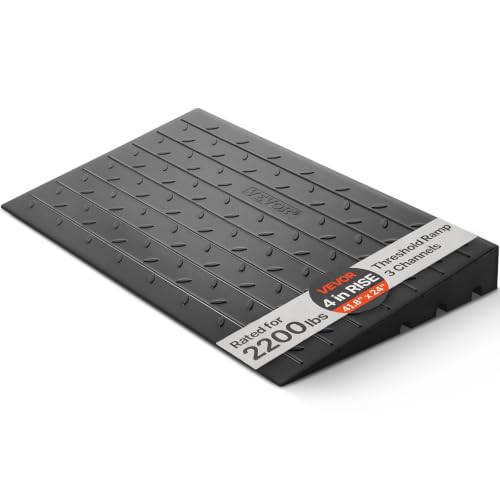
- 2,200-pound capacity with a weighty, stable design
- Three channels cover cables, wires, and hoses
- Non-slip rubber construction for indoor or outdoor use
Best For: High-load access over 4-inch rises, curbs, and garage entries
Most Adjustable
Adjustable 2.6- to 6-Inch Doorway Ramp

- Fits rises from 2.6 to 6 inches
- Independent legs accommodate uneven floors
- 1,100-pound aluminum design is easier to reposition
Best For: Rental doorways with variable rises or uneven entry surfaces
Best Lightweight Option
2-Inch Odorless Rubber Threshold Ramp
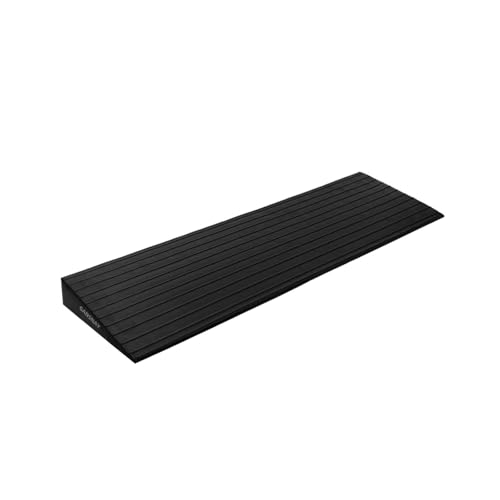
- Only 4.4 pounds with tool-free placement
- Grooved surface supports traction indoors and outdoors
- Compact design can be cut to fit
Best For: Low thresholds where portability and easy removal matter
Best Flexible Fit
LIEKUMM 3/4-Inch Odorless Threshold Ramp
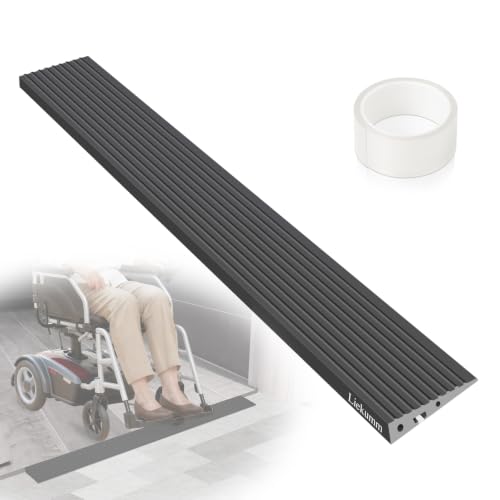
- 2,200-pound capacity
- Cuttable and modular design
- Built-in cable channel
Best For: Low thresholds, cables, and customizable doorway access
Best for Taller Thresholds
1.5-Inch Heavy-Duty Rubber Threshold Ramp

- Supports 2,204 pounds
- No assembly required
- Anti-slip drainage grooves
Best For: Higher 1.5-inch thresholds and heavy mobility equipment
Best Low-Profile Option
LIEKUMM 3/8-Inch Rubber Threshold Ramp

- Designed for 3/8-inch rises
- Cuttable and modular
- Adhesive strips included
Best For: Small interior door sills and robot vacuum transitions
Best Cut-to-Fit Rubber Option – VEVOR 1.6-Inch Cuttable Threshold Ramp
For renters searching for threshold ramps for renters, this VEVOR model is a practical choice when you need a low, customizable transition without permanent construction. Its 35.4-inch width can be cut to fit, and the included double-sided tape helps secure it on smooth floors or tile.
Best For: Renters who need a cuttable 1.6-inch doorway transition for wheelchairs, carts, strollers, or robot vacuums.
Pros:
- 35.4-inch width can be cut for different thresholds.
- Non-slip striped surface improves traction in wet conditions.
- Natural rubber construction is wear-resistant and supports heavy loads.
- Includes double-sided tape for smoother, more stable placement.
Cons:
- At 13.7 pounds, it is not the lightest portable option.
- The product may have a slight rubber smell initially.
- Adhesive installation may be less suitable for delicate flooring.
This ramp stands out for renters who want a customizable fit and a simple installation method. Measure the threshold and confirm that adhesive placement is acceptable for your flooring before buying.
Best Adjustable-Height Choice – UOKRR Adjustable Aluminum Threshold Ramp
This adjustable aluminum ramp is a strong contender among threshold ramps for renters when the doorway height is unusual or varies across locations. Its feet adjust from 2.6 to 7.1 inches, while the hinged transition plate helps create a smoother approach to the floor.
Best For: Renters who need a higher, adjustable transition for wheelchairs, scooters, walkers, carts, or strollers.
Pros:
- Adjusts to thresholds from 2.6 to 7.1 inches.
- Supports up to 800 pounds with an integrated 6061 aluminum structure.
- Built-in anti-slip teeth and reflective strips add visibility and traction.
- Swivel feet help level the ramp on uneven floors.
Cons:
- At 18.7 pounds, it is relatively heavy to move frequently.
- Its 36-inch maximum doorway width may not fit wider openings.
- Assembly requires attaching and adjusting the included feet.
Choose this model when adjustability matters more than minimal weight. It offers a more adaptable solution for taller thresholds, but measure both the doorway width and rise carefully before ordering.
Best Heavy-Duty 3-Inch Ramp – VEVOR 3-Inch Rubber Threshold Ramp
For renters who need threshold ramps for renters that can handle a substantial rise, this VEVOR model provides a 3-inch transition with beveled edges on all sides. Its one-piece rubber design requires no tools, making it useful for temporary or semi-permanent access at doorways, garages, gardens, and barns.
Best For: Renters needing a heavy-duty 3-inch ramp for wheelchairs, scooters, carts, or occasional vehicle access.
Pros:
- Beveled edges provide smoother approaches from multiple sides.
- Grooved rubber surface improves traction.
- One-piece design installs and removes without tools.
- Supports up to 2,200 pounds according to the supplied product details.
Cons:
- At 29 pounds, it is cumbersome to relocate regularly.
- Its 17.7-inch depth takes more floor space than low-profile ramps.
- The 3-inch rise may be excessive for a smaller threshold.
This is the most substantial rubber option in the group and suits renters who prioritize load capacity and portability over compact storage. Verify that the available landing space can accommodate its depth.
Best Lightweight Low-Rise Pick – 1-Inch PVC Cuttable Threshold Ramp
This lightweight PVC model is a straightforward option for renters comparing threshold ramps for renters at a one-inch step. The 40-inch length can be cut or spliced to suit different widths, and its grooved surface is designed to improve traction in wet or dry conditions.
Best For: Renters who need an inexpensive-feeling, lightweight low-rise transition for doorways, bathrooms, garages, or mobility aids.
Pros:
- Low 1-inch rise helps reduce tripping at small thresholds.
- 40-inch length can be cut and spliced for flexible sizing.
- Weighs just 2.7 pounds for easy handling.
- Grooved PVC surface helps reduce slipping.
Cons:
- It must be secured to the floor with adhesive backing.
- No manufacturer warranty is listed.
- The supplied details do not specify a load capacity.
This is the simplest choice for a small threshold where easy handling and cut-to-fit flexibility are priorities. Before purchasing, confirm the intended mobility device is appropriate for the unspecified load rating and that adhesive is acceptable on the floor.
Heavy-Duty Pick – VEVOR 4-Inch Rubber Threshold Ramp
For renters searching for threshold ramps for renters that can handle demanding indoor or outdoor use, this VEVOR model offers a broad, heavy-duty rubber design. Its 4-inch rise bridges doorways, curbs, garage entrances, and other small height gaps without permanent installation.
Best For: Wheelchairs, scooters, walkers, household vehicles, and pet access where a high-capacity, non-slip ramp is needed.
Pros:
- Supports up to 2,200 pounds and weighs 65 pounds, helping it resist shifting.
- Raised-button rubber surface provides slip resistance and shock absorption.
- Three channels help cover and protect cables, wires, or hoses.
- One-piece, tool-free design works indoors or outdoors.
Cons:
- At 65 pounds, it is substantially less portable than lightweight alternatives.
- The approximately 14-degree incline may require assistance for wheelchair users and is not recommended for people with severe mobility impairments.
- Its 24-inch width and 4-inch height may be excessive for narrow doorways or smaller rises.
This is a strong choice when stability, load capacity, and cable coverage matter more than portability. Measure the rise and available approach space carefully, and plan for assisted wheelchair use on the relatively steep incline.
Most Adjustable – Adjustable 2.6- to 6-Inch Doorway Ramp
Among threshold ramps for renters, this adjustable aluminum model is useful when the exact rise varies or the floor is uneven. Independent height-adjustment screws and swivel feet let you set each side separately without professional tools or permanent changes to the doorway.
Best For: Renters who need a repositionable ramp for thresholds or small steps between 2.6 and 6 inches high.
Pros:
- Adjusts from 2.6 to 6 inches to accommodate different doorway rises.
- Independent adjustments and swivel feet help it sit securely on uneven floors.
- Corrosion-resistant aluminum supports up to 1,100 pounds while remaining easier to move than steel.
- Frosted anti-slip strips and rubber contact strips improve traction and stability.
Cons:
- At 22 by 36 inches, it may need more approach space than a compact threshold wedge.
- Users must measure the rise, available space, and door clearance before ordering.
- Proper setup requires confirming that every adjustable foot rests securely on a firm surface.
The adjustable legs make this the most flexible option of the group for uneven rental entryways. It is particularly practical when a fixed-height ramp would not sit flush, though careful measuring and setup are essential.
Best Lightweight Option – 2-Inch Odorless Rubber Threshold Ramp
For renters who need threshold ramps for renters that are easy to move and store, this 2-inch rubber ramp is a compact, tool-free option. Its low profile supports smoother transitions over door sills while remaining suitable for indoor and outdoor use.
Best For: Low door thresholds, walkers, scooters, strollers, pets, and homes where a lightweight removable ramp is important.
Pros:
- Weighs only 4.4 pounds and requires no screws or tape for installation.
- Grooved, anti-slip surface helps provide traction for wheels, pets, and strollers.
- 31.5-inch length offers a gradual 12.7-degree approach to a 2-inch rise.
- Can be cut with a saw, wiped clean, and used across a wide stated temperature range.
Cons:
- The 2-inch rise is not suitable for taller thresholds.
- Its 8.7-inch width provides less lateral room than the larger ramps.
- Robot-vacuum compatibility depends on the cleaner’s maximum climbing angle and threshold setup.
This is the simplest renter-friendly choice for a modest threshold: lightweight, portable, and free of permanent hardware. Confirm the threshold height and the clearance of any robot cleaner before relying on it for that use.
Best Flexible Fit – LIEKUMM 3/4-Inch Odorless Threshold Ramp
For renters searching for threshold ramps for renters, this 3/4-inch LIEKUMM model offers a low-profile transition without drilling. Its cuttable rubber design, adhesive strips, and cable channel make it practical for adaptable indoor or outdoor doorway setups.
Best For: Wheelchairs, walkers, scooters, carts, strollers, and robot vacuums crossing 3/4-inch thresholds.
Pros:
- Supports up to 2,200 pounds.
- Textured anti-slip surface is designed for use even when wet.
- Can be trimmed, combined for wider access, and routed around cables.
- Odorless rubber is suitable for indoor and outdoor use.
Cons:
- Its 3/4-inch height may not suit taller thresholds.
- Adhesive strips may be less suitable for renters who need frequent repositioning.
This is a versatile renter-friendly option when the threshold height is modest and customization matters. Measure the doorway first, especially if you plan to trim or join multiple pieces.
Best for Taller Thresholds – 1.5-Inch Heavy-Duty Rubber Threshold Ramp
Among threshold ramps for renters, this 1.5-inch rubber ramp is suited to higher door thresholds and uneven transitions. It requires no assembly and is designed for indoor or outdoor use, though its substantial weight may make moving it less convenient.
Best For: Wheelchairs, scooters, power chairs, walkers, strollers, pets, and other equipment crossing 1.5-inch rises.
Pros:
- Handles up to 2,204 pounds.
- Integrated one-piece design requires no assembly.
- Grooved anti-slip surface also provides drainage paths.
- Natural rubber is designed to resist compression, deformation, and corrosion.
Cons:
- At approximately 13 pounds, it is less portable than lighter ramp options.
- The 7.87-inch depth may require more floor space than a compact threshold ramp.
- Its fixed 1.5-inch height may not match shorter thresholds.
This ramp is a strong choice for renters dealing with a pronounced threshold and needing a stable, no-assembly solution. Confirm both the rise and available landing space before ordering.
Best Low-Profile Option – LIEKUMM 3/8-Inch Rubber Threshold Ramp
For renters who need threshold ramps for renters at very small door-sill rises, this LIEKUMM model has a 3/8-inch profile. Adhesive backing, cuttable rubber, and a grooved surface support a simple installation without drilling on suitable smooth floors.
Best For: Low interior door sills, wheelchairs, walkers, carts, and robot vacuums.
Pros:
- Low 3/8-inch rise helps address small threshold edges.
- Grooved texture improves traction in dry or damp conditions.
- Can be trimmed or combined with additional pieces.
- Includes adhesive strips and requires no drilling.
Cons:
- Its very low profile is not intended for taller thresholds.
- Adhesive backing is designed for smooth floors and may limit placement options.
- Despite one title reference to 3,300 pounds, the supplied specifications list a 2,500-pound capacity.
This compact ramp is a practical match for minor door-sill bumps where a larger wedge would be excessive. Measure the rise carefully and verify that the floor surface is appropriate for the included adhesive.
How We Picked the Best Threshold Ramps for Renters
We focused on features that matter in temporary or rental housing: portable construction, straightforward placement, useful doorway width, stable traction, and minimal impact on the property. The lineup includes rubber and PVC designs, adjustable models, cuttable ramps, low-profile options, and heavy-duty ramps with capacities up to roughly 3,300 pounds.
Because threshold heights vary, we also considered whether each ramp is suited to a specific rise or can accommodate multiple heights. A proper fit is more important than choosing the ramp with the highest stated capacity.
Quick Comparison
| Ramp type | Best for | Main advantage | Watch for |
|---|---|---|---|
| Low-profile 3/8- to 1-inch ramps | Small lips and sliding-door tracks | Less noticeable transition | Limited height coverage |
| 1.5- to 2-inch rubber ramps | Common doorway thresholds | Good balance of traction and support | May need trimming or positioning |
| Adjustable ramps | Uneven or changing thresholds | Flexible height range | More parts and setup |
| 3- to 4-inch ramps | High thresholds and raised entries | Handles substantial height differences | Requires more floor space |
| Cuttable or cord-channel ramps | Customized renter setups | Can accommodate cables or unusual layouts | Confirm modifications are acceptable |
Key Buying Factors for Threshold Ramps for Renters
Measure the Rise First
Measure from the lower floor surface to the highest point of the threshold, not just the door panel. Choose a ramp designed for that exact height or an adjustable model that includes it. Also measure available floor depth and the clear doorway width.
Check the Transition and Traction
A ramp should sit flush or remain stable at both ends. Textured rubber generally provides reliable grip, while a non-slip surface is especially important in wet entryways. Look for a design that will not slide under the expected load.
Match Capacity and Mobility Equipment
Compare the ramp’s stated capacity with the combined weight of the user and wheelchair, scooter, walker, or cart. Wider ramps are usually more comfortable for mobility devices, but they can reduce usable space in narrow entries.
Consider Rental-Friendly Installation
Most portable threshold ramps simply rest in place, but heavy or tall models may benefit from anti-slip pads or a secure attachment. Avoid drilling or adhesive installation unless your landlord permits it. Rubber ramps can also have an odor when new, so ventilation may be useful.
Who Should Buy Which Threshold Ramps for Renters?
Choose a low-profile 3/8- to 1-inch model for a small door lip, sliding track, or minor floor transition. A 1.5- or 2-inch rubber ramp is a practical general-purpose choice for many standard thresholds. If your doorway height is uncertain or changes between locations, an adjustable ramp offers the most flexibility.
For high thresholds, select a 3- or 4-inch model only after confirming you have enough approach space. A cuttable ramp can suit an unusual doorway when its material and modification instructions permit trimming. If cords cross the entry, a model with integrated channels may improve organization, but verify that the channels do not interfere with wheels.
Before buying, confirm the product’s actual dimensions, rise rating, load capacity, and return policy. The best Threshold Ramps for Renters are not necessarily the largest or strongest; they are the ones that fit the measured threshold securely, provide dependable traction, and can be removed without leaving permanent changes.